Benefits of Journaling for Anxiety
Anxiety rarely responds well to being ignored, and it does not respond well to being fought either. What it does respond to, quietly and gradually, is being witnessed. Journaling offers a way to sit with anxious thoughts without being consumed by them, to lay them out on a page where they can be seen clearly rather than spinning endlessly in your head. The benefits are not dramatic or instant, but they are real, and they compound over time.
Key benefits
Externalises racing thoughts
When anxious thoughts stay in your head, they loop. Writing them down breaks the loop by giving each thought a fixed form. What felt infinite and overwhelming becomes a finite list of specific worries, most of which are more manageable than they seemed.
Reduces emotional intensity
The act of translating a feeling into words engages the prefrontal cortex, the part of the brain involved in rational thinking. This can reduce the intensity of the emotional response. You are not suppressing the anxiety. You are processing it through a different channel.
Reveals patterns you cannot see in the moment
Anxiety often feels random, but a journal creates a record. Over weeks, you may notice that your anxiety peaks on Sunday evenings, or that it clusters around certain relationships or responsibilities. Seeing the pattern is the first step toward understanding it.
Creates a private, judgement-free space
Many people carry anxiety about their anxiety, worrying that their fears are irrational or that others would judge them for it. A private journal removes that layer entirely. You can write the most irrational fear you have, and it simply sits there on the page, unjudged.
What the evidence suggests
Research by James Pennebaker and others has consistently shown that expressive writing, the practice of writing about thoughts and feelings related to stressful experiences, can lead to measurable reductions in anxiety symptoms. A meta-analysis published in the British Journal of Health Psychology found that participants who engaged in expressive writing reported lower levels of anxiety and fewer intrusive thoughts compared to control groups. The mechanism appears to involve both cognitive processing, making sense of experiences through narrative, and emotional habituation, where repeated exposure to the anxiety-provoking thought in a safe context reduces its charge over time. Evening journaling may offer additional benefits, as it allows the brain to process the day's stressors before sleep rather than carrying them into the night.
Putting it into practice
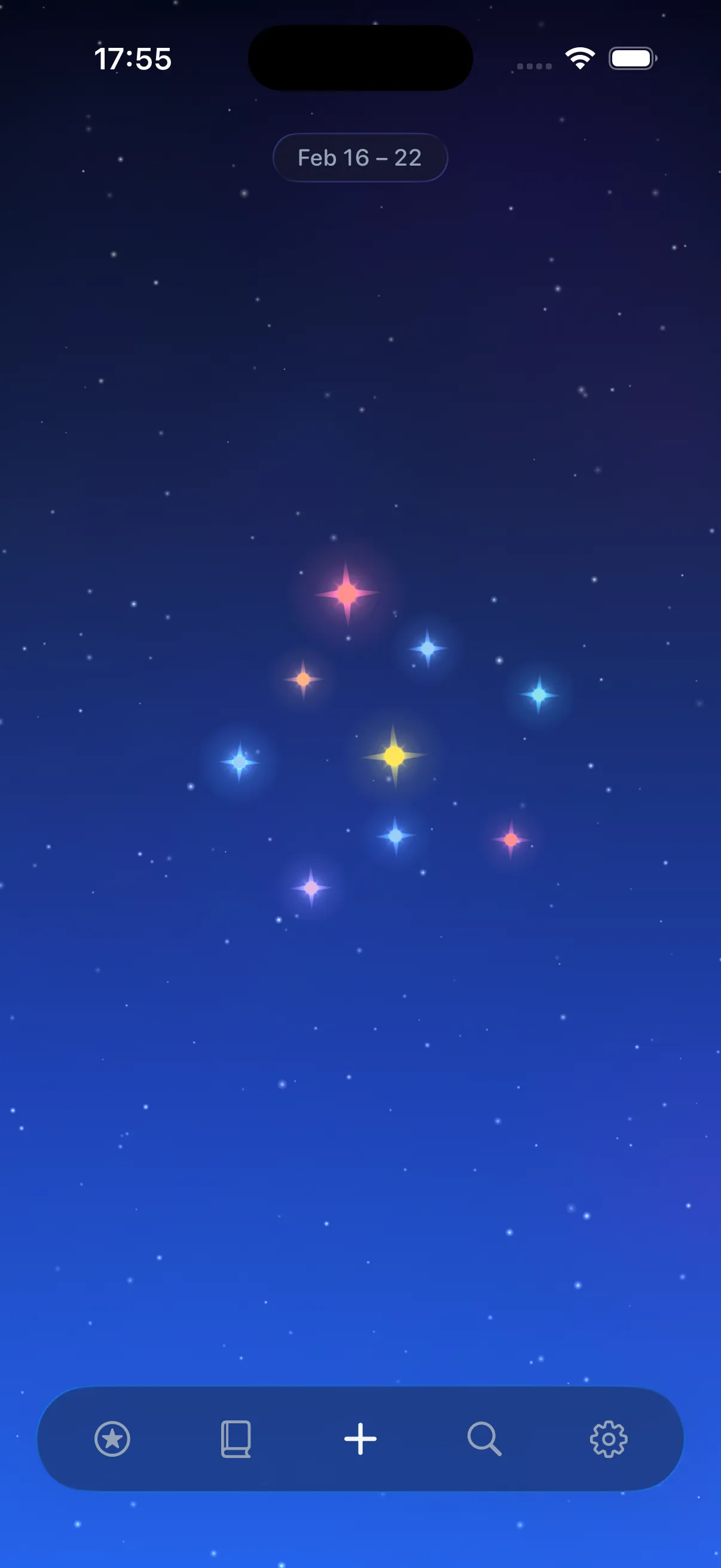
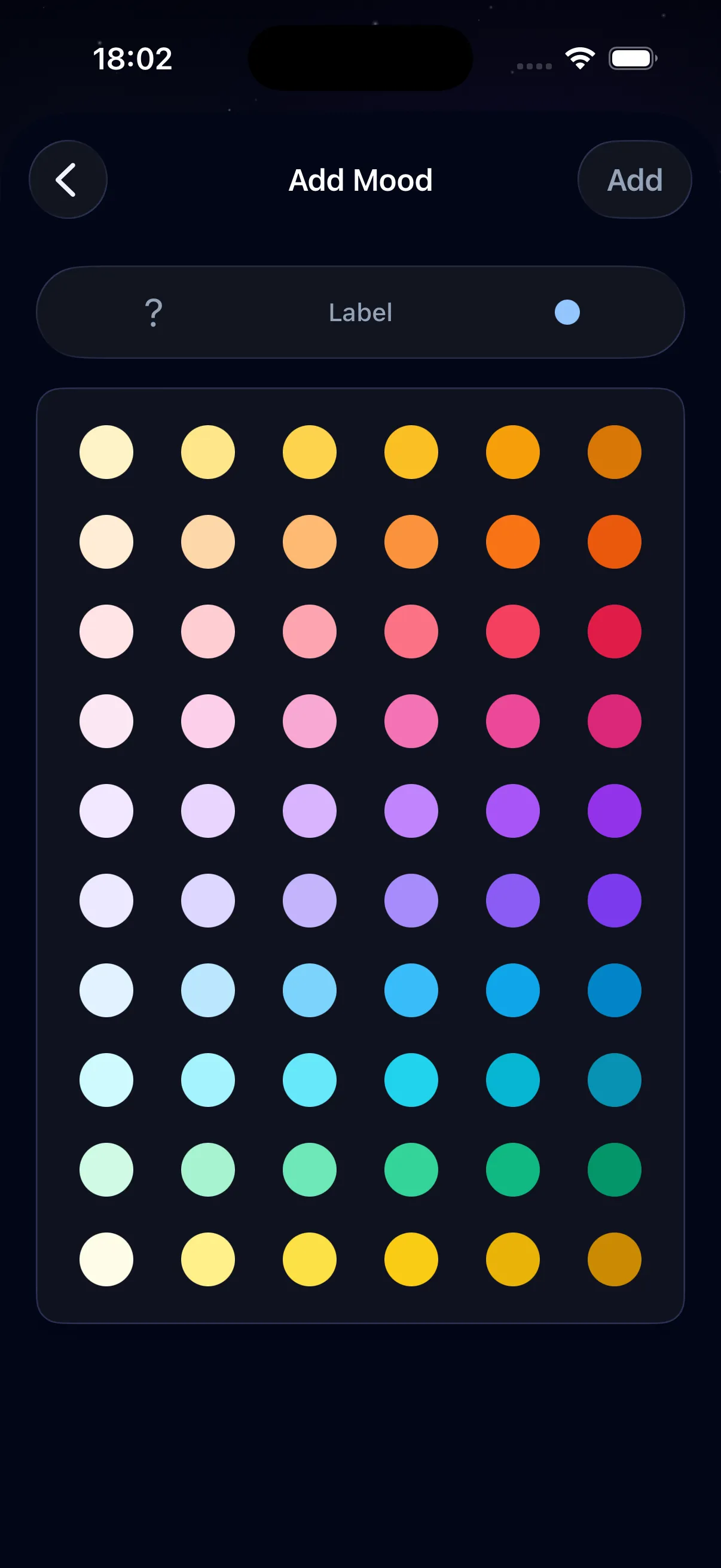
You do not need a complex method. Begin by writing for a few minutes each evening about whatever is weighing on you — our guide to journaling for anxiety walks through this step by step. Name the worry specifically, describe how it feels in your body, and if you can, note whether it is something within your control. Anxiety prompts can help when the blank page feels like too much. Over time, this simple practice trains your mind to observe anxiety rather than be swept away by it. In Nightbook, each entry becomes a star in your sky. On difficult nights, those stars might glow in the colours you associate with worry or unease. But over time, looking up at your sky and seeing that you showed up and wrote, even on the hard nights, becomes its own quiet form of reassurance.
Prompts to explore this
- ★ What is one worry I keep returning to, and what would it feel like to set it down, even briefly?
- ★ When I look back at last week, which anxious thoughts actually came true and which did not?
- ★ Where in my body do I feel anxiety right now, and can I describe it in detail?
- ★ What would I say to a friend who shared this exact worry with me?
- ★ If I could release one concern before sleep tonight, which would I choose?
Keep exploring
Benefits
Turn your reflections into stars
Nightbook is a quiet journal for your evening thoughts. Every entry becomes a glowing star. Every week becomes a constellation.