Benefits of Journaling for Mental Health
Mental health is not a problem to be solved in a single conversation or a single night. It is something you tend to, quietly and repeatedly, the way you might tend to a garden. Journaling offers one of the simplest ways to do this. It asks nothing of you except honesty, and it gives back a record of where you have been and how far you have come.
Key benefits
A daily act of self-care
Writing for a few minutes each evening is a small commitment, but it carries real weight. It signals to yourself that your inner life matters enough to pay attention to. Over time, this signal becomes a steady source of stability, something you do for yourself regardless of how the day went.
Makes the invisible visible
Much of what affects your mental health operates beneath the surface. Journaling brings it up into language, where it can be examined rather than merely endured. A vague sense of dread becomes a specific concern. A recurring low mood reveals its triggers.
Provides continuity between good and difficult days
When you are struggling, it can feel as though things have always been this way. A journal provides evidence to the contrary. You can look back and see that you have weathered hard stretches before, and that lighter days followed. This continuity is quietly powerful.
Complements professional support
Journaling does not replace therapy or medical care, but it sits well alongside them. Writing between sessions helps you notice what you want to bring up next. It keeps the thread of your inner work alive during the days in between.
What the evidence suggests
A substantial body of research supports the connection between regular writing and improved mental health outcomes. Studies in expressive writing, pioneered by researchers such as James Pennebaker, have found that putting difficult experiences into words can reduce symptoms of depression and anxiety, lower physiological stress markers, and improve overall psychological wellbeing. Evidence from positive psychology suggests that reflective writing practices, including gratitude journaling and structured self-reflection, contribute to greater emotional balance and life satisfaction. Cognitive behavioural frameworks also point to the value of written self-monitoring, where tracking thoughts and moods on paper helps individuals identify distorted thinking patterns and respond to them more effectively. The consistency of the practice appears to matter as much as the content.
Putting it into practice
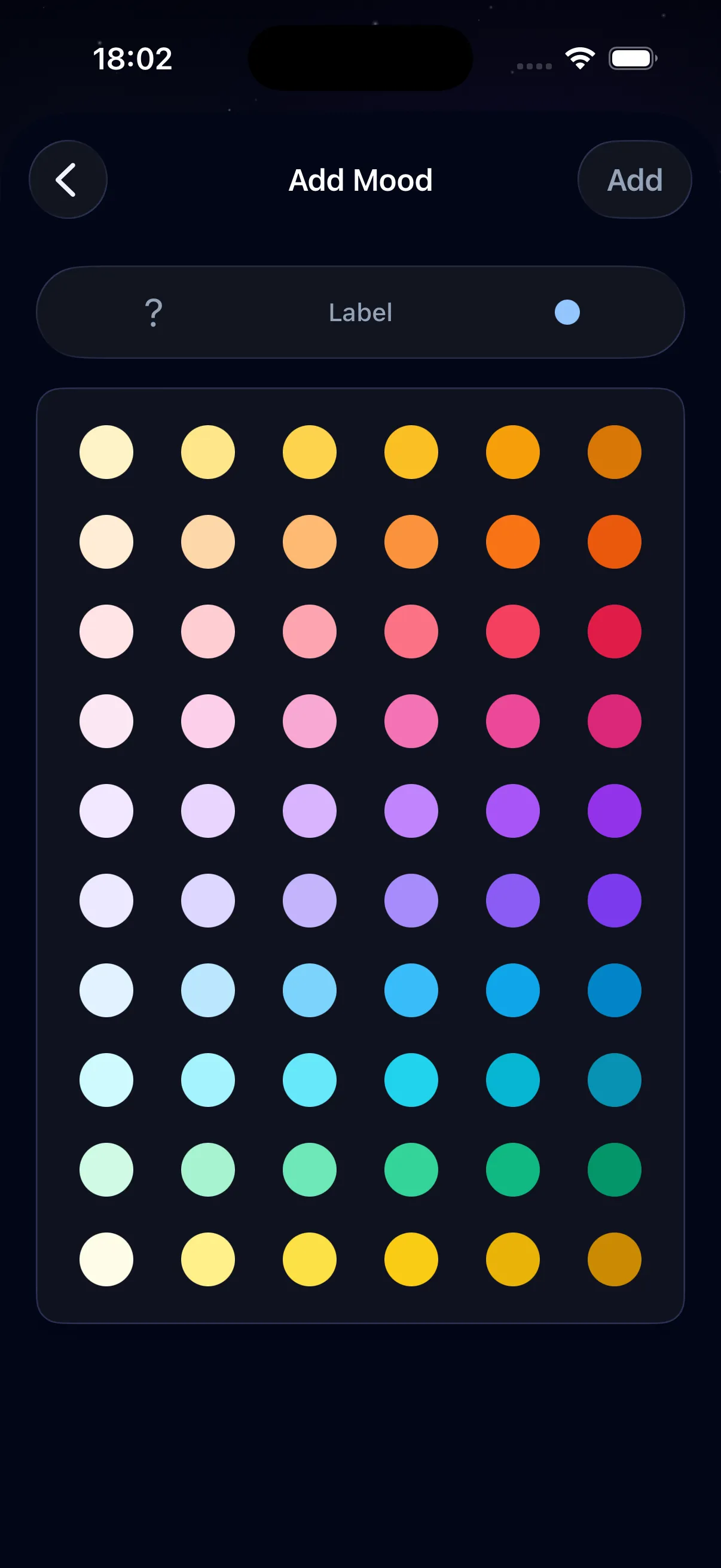
You do not need to write a lot. A few honest sentences each evening are enough to begin. Our guide to journaling for healing can help you find your way in gently. Self-compassion prompts offer a kind place to start on difficult nights. Start by noting how you felt today, not in general terms but with as much specificity as you can manage. Name the emotions. Describe the moments that shaped them. Over weeks, this builds a picture of your mental landscape that would be impossible to hold in memory alone. In Nightbook, each entry is recorded as a star, and your sky fills gradually with the colours of your moods. On nights when it is hard to know where to start, a prompt can guide you gently inward. What matters is not eloquence but regularity.
Prompts to explore this
- ★ How would I honestly describe my mental health this week, without minimising or exaggerating?
- ★ What is one thing I did today that supported my wellbeing, even in a small way?
- ★ When did I last feel genuinely at ease, and what was different about that moment?
- ★ What would I like to feel less of in my daily life, and what might be feeding it?
- ★ If I could ask my future self one question about how things turn out, what would it be?
Keep exploring
Benefits
Turn your reflections into stars
Nightbook is a quiet journal for your evening thoughts. Every entry becomes a glowing star. Every week becomes a constellation.