Benefits of Journaling for Sleep
The hours before sleep are when the mind tends to unspool. Worries from the day replay, tomorrow's obligations queue up, and the body tenses against rest it desperately needs. Writing before bed interrupts this cycle. It gives the mind permission to set things down, creating a gentler passage from waking to sleep.
Key benefits
Quiets the mind before rest
A busy mind resists sleep. When you write down the thoughts circling in your head, you transfer them to the page and signal to your brain that they have been attended to. This small act of closure can be the difference between lying awake for an hour and drifting off with relative ease.
Creates a consistent wind-down ritual
Sleep responds well to routine. Writing at the same time each night becomes a cue that the day is ending. Your body begins to associate the act of journaling with the approach of rest, and over time this association deepens into a reliable rhythm.
Processes the emotional residue of the day
Unprocessed emotions are restless companions in bed. A journal entry gives you a few minutes to acknowledge what happened and how it felt, so those feelings do not ambush you the moment the lights go out. You do not need to resolve anything. Acknowledgement alone is often enough.
Reduces night-time rumination
Rumination thrives in the dark and quiet. Writing externalises the thoughts that would otherwise loop, giving them a fixed form rather than letting them spiral. Research suggests that even writing a simple to-do list before bed can help you fall asleep faster than lying there trying to remember everything.
What the evidence suggests
Studies published in the Journal of Experimental Psychology have found that writing a specific to-do list before bed helps people fall asleep significantly faster than writing about completed tasks. Broader research in sleep science suggests that pre-sleep cognitive arousal, the tendency to think and worry in bed, is one of the primary drivers of insomnia. Expressive writing has been shown to reduce this cognitive arousal by providing a structured outlet for unresolved thoughts. Evidence from behavioural sleep medicine also supports the role of consistent evening rituals in strengthening the circadian association between certain behaviours and sleep onset. The combination of emotional processing and routine appears to be particularly effective.
Putting it into practice
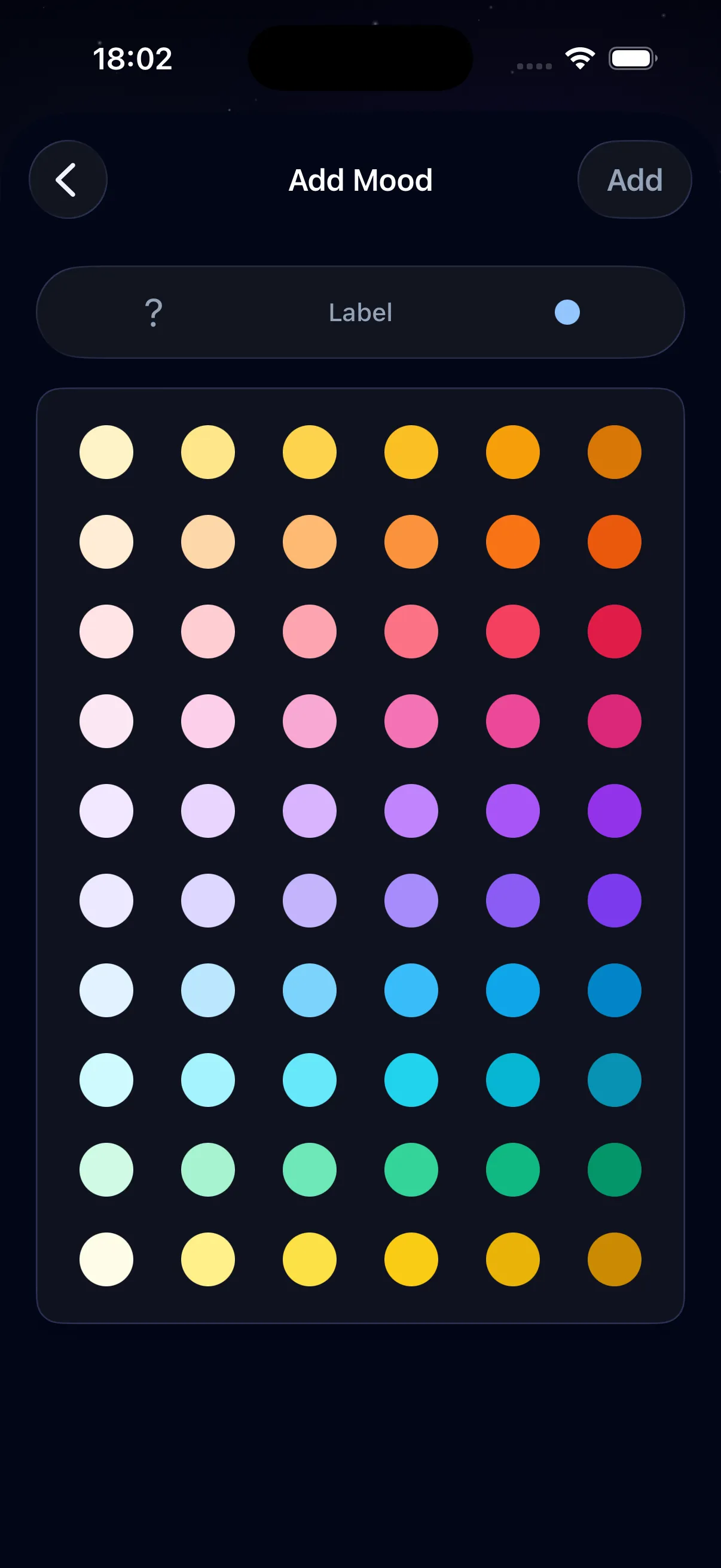
Keep your journal by your bed and write in the last few minutes before you turn out the light. Our guide to journaling before bed walks through this practice. Bedtime prompts can help when you are not sure where to begin. Start with whatever is on your mind. It might be a worry about tomorrow, a lingering feeling from today, or simply a list of things you do not want to forget. Let the writing be loose and unpolished. In Nightbook, the dark interface is designed for exactly this moment, when bright screens would work against the rest you are trying to find. Tag your mood, watch a star appear in your sky, and let the day close. Some nights the writing will feel like release. Other nights it will simply feel like a small, good habit. Both are enough.
Prompts to explore this
- ★ What is keeping my mind active tonight, and can I name it specifically?
- ★ How does my body feel right now, and where am I holding the day's tension?
- ★ What is one thing I can let go of before sleep, knowing it will still be there tomorrow?
- ★ What was the most restful moment of my day, and what made it so?
- ★ If I could carry one peaceful thought into sleep tonight, what would it be?
Keep exploring
Benefits
Turn your reflections into stars
Nightbook is a quiet journal for your evening thoughts. Every entry becomes a glowing star. Every week becomes a constellation.