What Is Circadian Rhythm?
Your circadian rhythm is the roughly 24-hour internal cycle that regulates when you feel awake and when you feel sleepy. It is governed by light, temperature, and habit. When it is well aligned, sleep comes easily and energy flows through the day in a natural arc.
A closer look
The word "circadian" comes from the Latin circa diem, meaning "about a day." Deep within the brain, a tiny cluster of cells called the suprachiasmatic nucleus acts as a master clock, responding primarily to light and darkness. When the sun sets, this clock signals the release of melatonin, preparing the body for sleep. When morning light arrives, it signals wakefulness. Modern life frequently disrupts this ancient rhythm. Artificial light, late-night screens, irregular schedules, and shift work can all confuse the body's sense of when night truly begins. The result is often poor sleep, daytime fatigue, and a vague feeling of being out of step with yourself, as though your inner clock and your outer life are speaking different languages. Honouring your circadian rhythm does not require dramatic changes. It begins with paying attention to the natural signals your body already sends: the dip in energy after dark, the quiet pull towards rest as the evening deepens. The benefits of journaling for sleep are closely connected to this alignment. When you align your habits with these signals rather than working against them, sleep becomes less of a struggle and more of a gentle return.
Putting it into practice
The most effective way to support your circadian rhythm is through consistent light exposure: bright, natural light in the morning and dim, warm light in the evening. Try to wake and sleep at similar times each day, even on weekends. In the hours before bed, reduce screen brightness and give your eyes, and your mind, a chance to register that the day is ending. Digital detox prompts can help you reflect on your relationship with screens before sleep. An evening journaling ritual fits naturally into this rhythm. As the light fades and the sky darkens, sitting down to write a few words in Nightbook marks the transition from day to night. It is a gentle cue to your body and mind that the time for doing has passed, and the time for reflection and rest has arrived. Your entries, like stars, belong to the evening.
Prompts to explore this
- ★ At what point today did I feel my energy begin to fade?
- ★ Did I spend time in natural light today, and how did it affect me?
- ★ What signals does my body send when it is ready for sleep?
- ★ How does my evening routine support, or work against, my natural rhythm?
Keep exploring
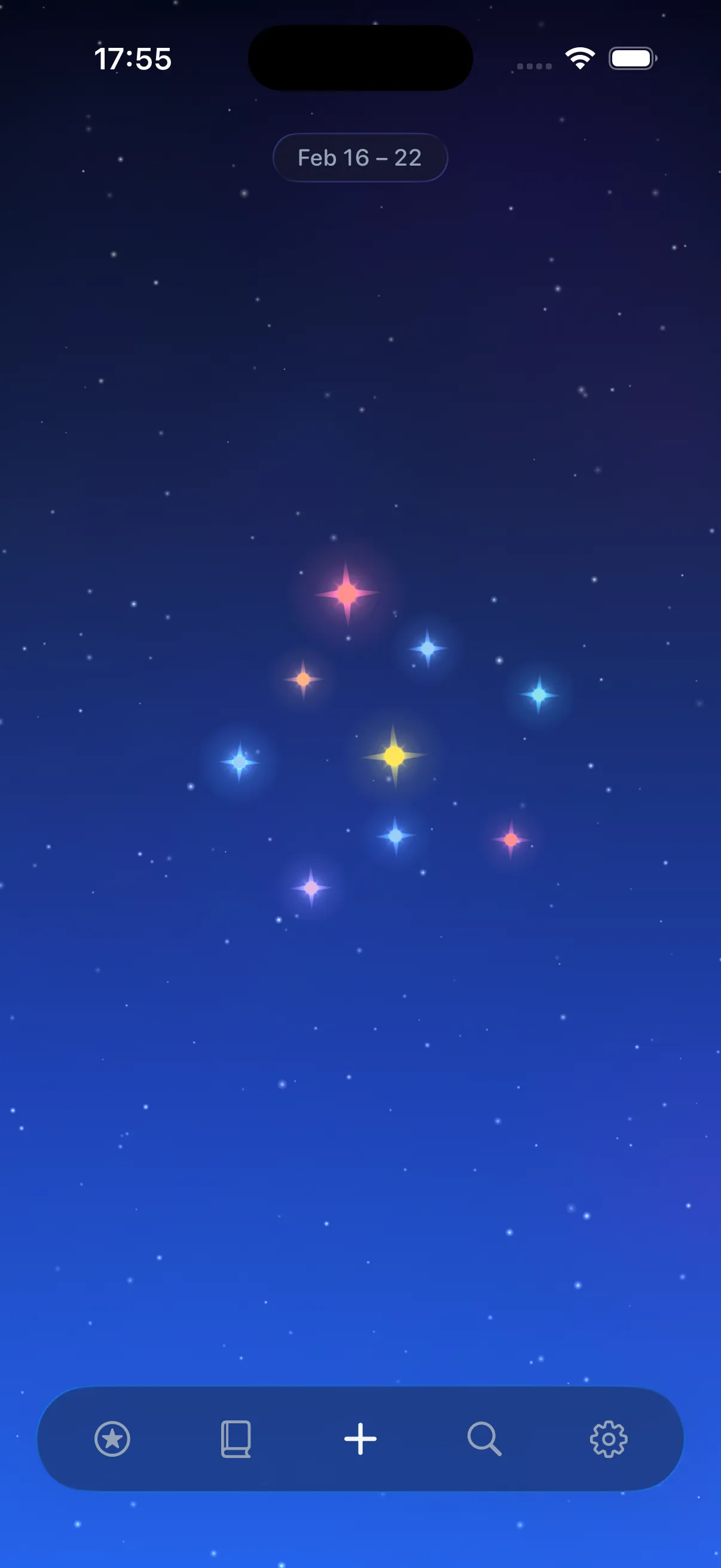
Turn your reflections into stars
Nightbook is a quiet journal for your evening thoughts. Every entry becomes a glowing star. Every week becomes a constellation.