What Is Expressive Writing?
Expressive writing is the practice of writing openly and honestly about your thoughts and emotions, particularly around difficult or significant experiences. Developed as a research method by psychologist James Pennebaker, it is one of the most studied forms of therapeutic writing. The aim is not to produce polished text but to give shape to what you are feeling.
A closer look
In the late 1980s, Pennebaker asked participants to write for fifteen to twenty minutes a day about their most troubling experiences. The results were striking. Those who wrote about emotional events, rather than neutral topics, showed improvements in physical health, immune function, and psychological wellbeing. The findings have been replicated many times since. The benefits of journaling for mental health draw heavily on this body of research. What makes expressive writing effective is not entirely clear, but several explanations have been proposed. Writing about an experience may help you organise it into a coherent narrative, making it easier to process. It may reduce the cognitive burden of suppressing difficult thoughts. And it may create a sense of distance, once something is on the page, it no longer needs to be held so tightly in the mind. Expressive writing is not the same as venting. Simply writing "I am angry" over and over does not produce the same benefits. The key is engagement, allowing yourself to explore the experience, to turn it over, to find the words that feel most true. It is a gentle but honest reckoning with what is happening inside you.
Putting it into practice
Choose an experience that has been weighing on you. The stream-of-consciousness method works well here. Set a timer for fifteen to twenty minutes and write about it, what happened, how you felt then, how you feel now. Do not worry about spelling, grammar, or structure. Write only for yourself. You can discard what you write afterwards if you wish. The value is in the writing, not the keeping. In the evenings, Nightbook offers a quiet space for this kind of writing. When the day has been difficult, an entry does not need to be positive or tidy. Sometimes the most meaningful star in your sky is the one born from a hard truth honestly expressed. The sky holds all of it: the bright and the dim, the joyful and the aching.
Prompts to explore this
- ★ What experience from today or this week is asking to be written about?
- ★ What am I feeling right now that I have not said out loud?
- ★ If I could write a letter to someone about how I feel, what would I say?
- ★ What is the hardest thing I am carrying, and what would it feel like to set it down?
- ★ What truth have I been avoiding?
Keep exploring
Turn your reflections into stars
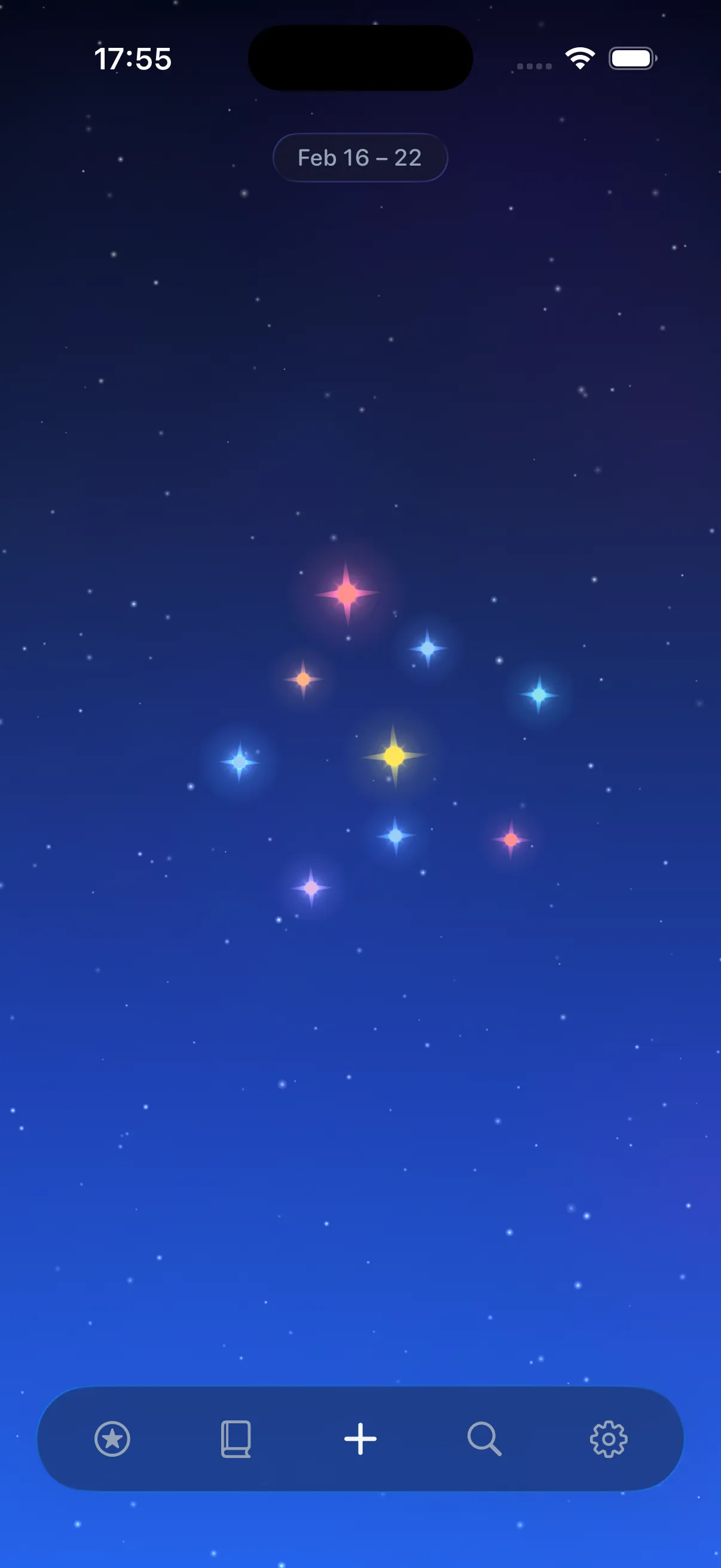
Nightbook is a quiet journal for your evening thoughts. Every entry becomes a glowing star. Every week becomes a constellation.