What Is Rumination?
Rumination is the habit of turning the same thoughts over and over in your mind, usually negative ones, replaying mistakes, worrying about what might happen, circling without resolution. It is thinking that feels like it is going somewhere but never arrives.
A closer look
The word "rumination" comes from the Latin ruminare, meaning to chew over, like a cow chewing cud. It is an apt image. Ruminative thinking takes the same material and processes it again and again, without producing anything new. Unlike genuine reflection, which moves towards understanding, rumination stays locked in a loop. Rumination is closely linked to anxiety and low mood. It tends to intensify in the evening, when the distractions of the day fall away and the mind is left alone with itself. The bedroom becomes a stage for every unresolved worry, every awkward exchange, every fear about tomorrow. Sleep, which requires a certain surrender of control, feels impossible when the mind refuses to let go. What makes rumination so persistent is that it disguises itself as problem-solving. It feels productive, as though thinking harder will eventually lead to a solution. But research shows the opposite. Rumination narrows perspective, increases distress, and makes it harder to see clearly. Journaling for overthinking offers one way to break the pattern: shifting from thinking in circles to placing those thoughts somewhere outside your head.
Putting it into practice
One of the most effective ways to interrupt rumination is to externalise your thoughts, to move them from your mind to a page. A stream of consciousness approach works well here: writing down what you are thinking, without trying to solve or judge it, can break the loop. The thoughts do not disappear, but they lose some of their spinning urgency when they are held in words rather than in your head. In Nightbook, this practice becomes part of your evening ritual. If your mind is circling, open the app and write what is there, honestly, without editing. Let the entry become a star, something you have set down rather than something you are still carrying. Over time, you may notice that the act of writing itself brings a kind of quiet, a gentle pause in the turning. It will not silence every thought, but it gives your mind permission to rest.
Prompts to explore this
- ★ What thought kept returning to me today, and what might it be trying to tell me?
- ★ Am I replaying something that I cannot change, and what would it mean to set it down?
- ★ If I wrote my worry on the page and closed the book, how might that feel?
- ★ What is the difference between reflecting on something and going round in circles about it?
- ★ What do I need to hear right now that might quiet my mind?
Keep exploring
Turn your reflections into stars
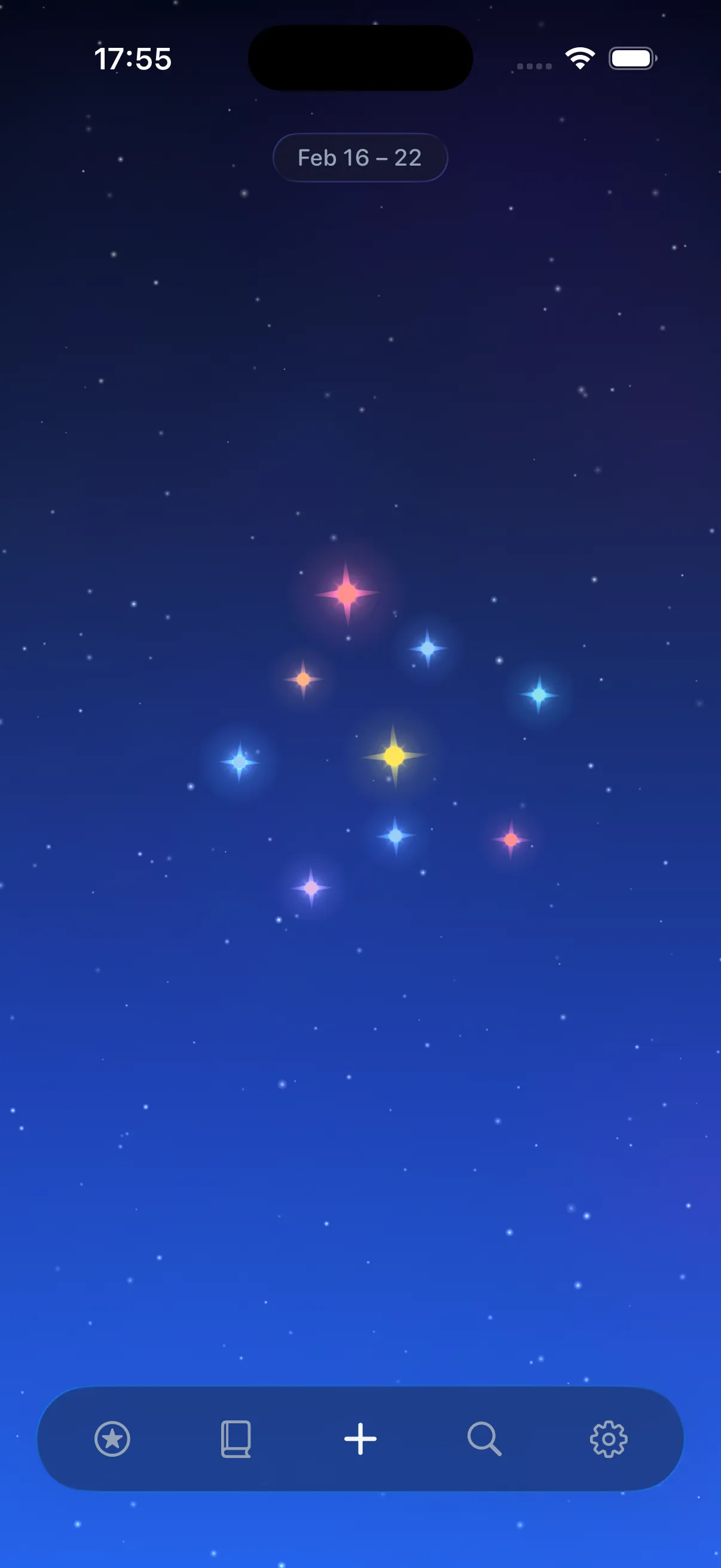
Nightbook is a quiet journal for your evening thoughts. Every entry becomes a glowing star. Every week becomes a constellation.