How to Journal for Anxiety
Anxiety tends to grow louder at the end of the day, when the noise falls away and your mind begins looping through everything unresolved. Journaling gives those thoughts somewhere to land. Not to fix them or analyse them, but to move them from your head to the page so they stop circling. This guide walks you through a simple approach to journaling for anxiety, one you can return to any evening it feels like too much.
Why this helps
Writing about anxious thoughts externalises them. What felt overwhelming inside your head often looks smaller and more manageable on the page. Research into expressive writing suggests that naming emotions and describing worries in writing can reduce their intensity, partly because the act of putting language to a feeling engages different parts of the brain than the feeling itself. You are not solving the anxiety. You are changing your relationship to it, even if only slightly, by witnessing it rather than being consumed by it. Over time, a written record also helps you notice patterns: which situations trigger your anxiety, which fears came true and which did not, and how your relationship with worry shifts week to week.
How to begin
Choose a consistent time
Anxiety journaling works best as part of an evening routine, when the day is done and you can write without needing to act on anything. Pick a time that feels natural, perhaps after brushing your teeth or getting into bed.
Start with what is on your mind
Do not search for the right thing to write. Just begin with whatever is sitting most heavily. You might write a sentence or a full page. The length does not matter. What matters is that the thoughts move from your head to the page.
Name the feeling, not just the facts
Instead of only listing what happened, try to describe how it made you feel. "I am worried about tomorrow's meeting" is a start. "I feel a tight knot in my chest when I think about being put on the spot" goes deeper. The more specific you are about the feeling, the more the writing helps.
Notice patterns over time
After a week or two, look back through your entries. You may begin to see recurring themes, times of day when anxiety peaks, or situations that consistently trigger it. This is not about judging yourself. It is about understanding yourself a little better.
Close with one grounding thought
Before you finish, write one thing that is true and steady. It might be something you are grateful for, something that went well, or simply a reminder that you have handled difficult days before. Let that be the last thing you carry into sleep.
Things to keep in mind
- — You do not need to write well. Anxious journaling is not about prose. It is about release.
- — If a blank page feels overwhelming, try starting with "Right now I feel..." and see where it goes.
- — Keep your journal private and protected. Knowing no one else will read it makes honesty easier.
- — Some nights you will write three lines. That is enough. Consistency matters more than depth.
- — If writing about anxiety makes it worse in the moment, stop. This is a practice, not a punishment.
Prompts to try tonight
- ★ What is sitting most heavily on your mind as the day ends?
- ★ If your anxiety had a colour and a shape tonight, how would you describe it?
- ★ Which of your worries are within your control, and which are not?
- ★ Write a short note to your anxious self, as though you were comforting a friend.
- ★ What is one thought you would like to carry into sleep instead of this worry?
Keep exploring
Guides
Benefits
Turn your reflections into stars
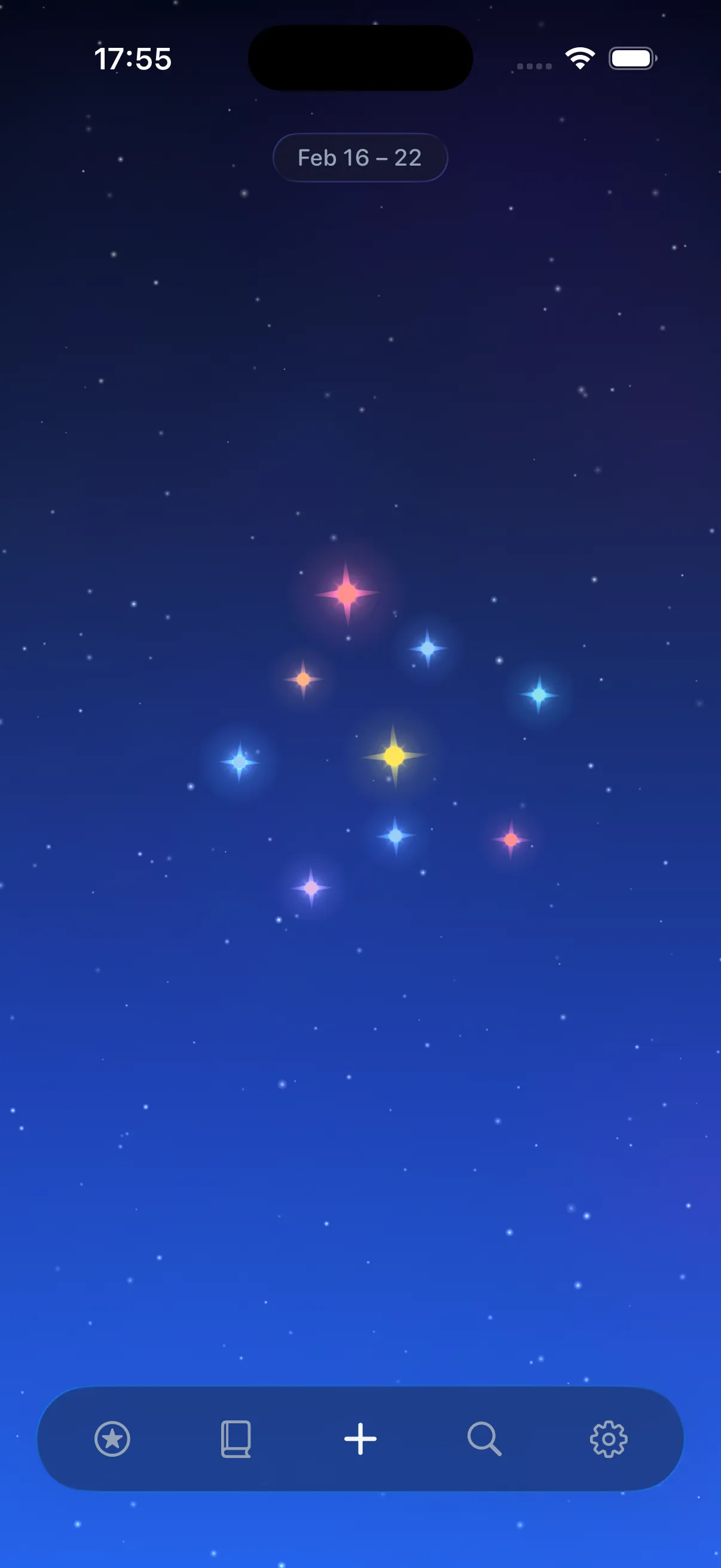
Nightbook is a quiet journal for your evening thoughts. Every entry becomes a glowing star. Every week becomes a constellation.