How to Journal for Emotional Processing
Emotions do not always arrive with labels. Sometimes you feel something strongly but cannot quite name it, or you sense a mood lingering from the day without understanding its source. Journaling offers a way to sit with those unnamed feelings and gently draw them into focus. This guide will help you use writing as a way to process what your day has left you carrying.
Why this helps
Emotional processing is the act of allowing a feeling to be fully experienced rather than suppressed, dismissed, or acted on impulsively. Writing supports this by slowing the experience down. When you put words to what you feel, you engage the prefrontal cortex alongside the emotional centres of the brain, which research suggests helps regulate emotional intensity. The page holds your feeling without reacting to it, without offering advice or judgement. Over time, this practice builds what psychologists call emotional granularity, the ability to distinguish between closely related feelings like disappointment and sadness, or frustration and helplessness. That finer awareness does not make difficult emotions disappear, but it does make them more navigable. You begin to understand your own emotional weather rather than being caught in it.
How to begin
Pause and notice what is present
Before you write, take a moment to sit quietly. Notice what you feel without trying to change it. Is there heaviness, restlessness, warmth, numbness? Let the feeling simply be there before you reach for words.
Name the feeling as precisely as you can
Move beyond broad labels like "bad" or "upset." Try to find the specific word. Is it disappointment, resentment, longing, unease? If no word fits, describe the feeling as a sensation, a colour, or an image. This practice builds emotional clarity over time.
Trace the feeling back to its source
Write about when you first noticed this emotion today. What was happening around you? Who was present? Sometimes the origin surprises you, and the feeling belongs to a different moment than you expected.
Let the feeling speak
Try writing from the perspective of the emotion itself. What would your sadness say if it could talk? What does your frustration want you to know? This can feel unusual at first, but dialogue journaling formalises this technique and it often unlocks understanding that straight reflection does not.
Close with acknowledgement
End your entry by simply acknowledging what you wrote. You do not need to resolve the feeling or find a lesson. Writing something like "I felt this today, and I have given it space" is a complete ending.
Things to keep in mind
- — Processing emotions through writing does not require eloquence. Clumsy, half-formed sentences work perfectly well.
- — If a feeling returns across several entries, it may be asking for more than acknowledgement. Consider what action it might need.
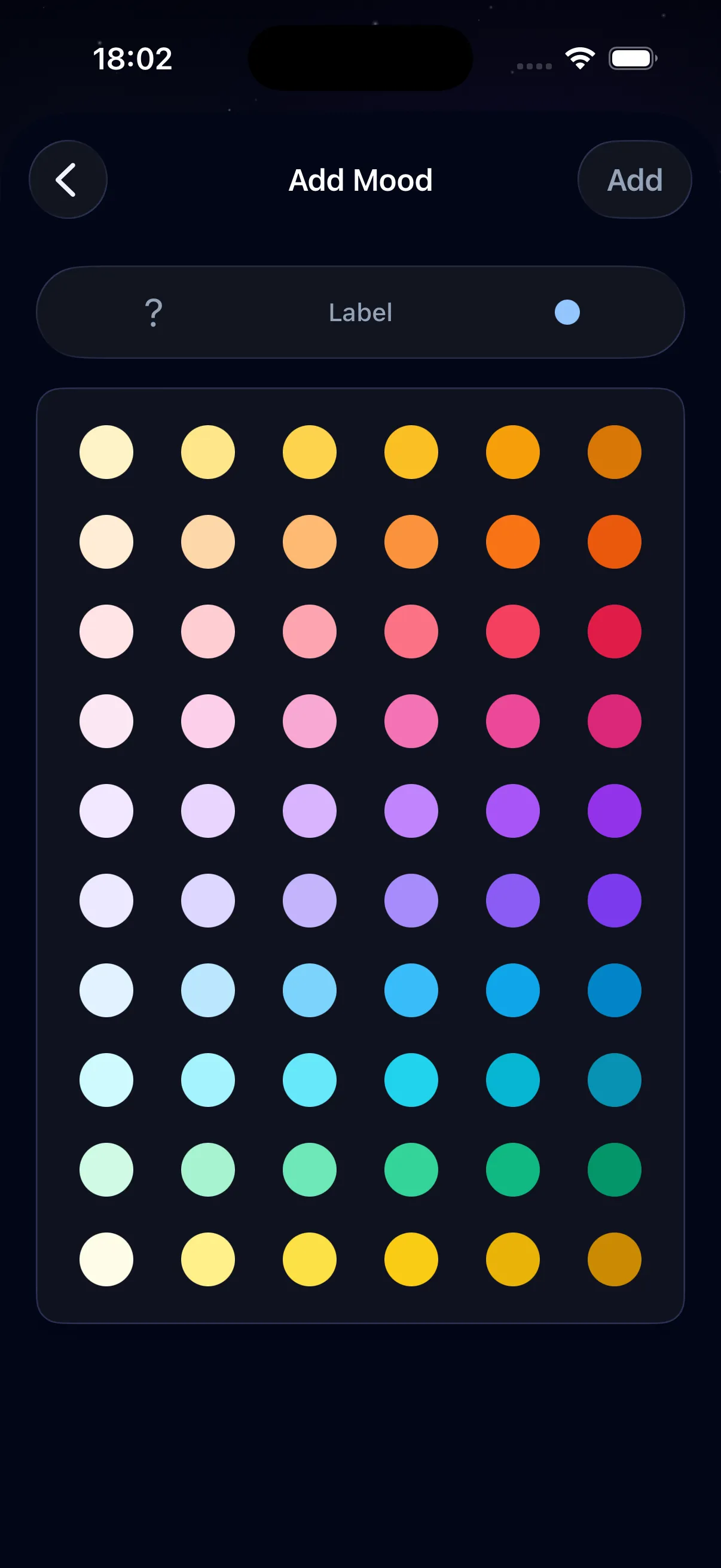
- — Nightbook's mood tracking can help you notice emotional patterns across weeks that single entries might miss.
- — Some emotions process quickly on the page. Others need several nights. Both are normal.
- — You do not have to share or explain what you write. The processing happens in the writing itself.
Prompts to try tonight
- ★ What emotion has been most present for you today, and where do you feel it in your body?
- ★ If this feeling had been trying to tell you something all day, what might its message be?
- ★ When did you last feel something similar, and what was different about the circumstances?
- ★ Which emotions do you find easiest to write about, and which do you tend to avoid?
- ★ What would it feel like to let this emotion be here without needing to fix or explain it?
Keep exploring
Guides
Turn your reflections into stars
Nightbook is a quiet journal for your evening thoughts. Every entry becomes a glowing star. Every week becomes a constellation.