How to Journal About Fear
Fear has a way of expanding when it goes unexamined. It fills the spaces between your thoughts and makes everything feel more precarious than it may be. Writing about fear does not make it vanish, but it does bring it into proportion. This guide offers a way to meet your fears on the page, where they can be seen clearly and held without overwhelming you.
Why this helps
Fear thrives in vagueness. The less defined it is, the more power it holds. Writing forces specificity. When you describe exactly what you are afraid of, the fear often becomes smaller and more contained than the shapeless dread that preceded it. Neuroscience research shows that labelling an emotion, a practice called affect labelling, reduces activity in the amygdala and increases activity in areas of the brain associated with rational thought. In other words, naming your fear literally calms the part of your brain that generates it. A journal also provides perspective over time. Looking back at entries from weeks or months ago, you will likely find fears that never materialised and challenges you navigated more capably than you expected. This evidence of your own resilience is quietly reassuring and accumulates with every entry you write.
How to begin
Name the fear precisely
Write down exactly what you are afraid of. Avoid generalities. Instead of "I am scared about work," try "I am afraid I will be asked a question I cannot answer in Thursday's meeting." Precision reduces the fear's apparent size.
Separate fact from projection
Write two short lists. One for what you know to be true, and one for what you are imagining might happen. Fear tends to present speculation as certainty. Cognitive reframing helps here, and seeing the difference on paper can bring relief.
Explore where this fear lives in your history
Many fears have roots that stretch back further than the present situation. Write about whether this feeling is familiar. When did you first experience something like it? Understanding the origin can loosen its hold.
Write about a fear you have already survived
Think of a time you were frightened and came through it. Describe what happened and how you managed. This is not to minimise your current fear but to remind yourself that you have faced difficult things before.
Close with what is solid
End by writing about something in your life that feels stable and real. A relationship, a skill, a place you feel safe. Let the entry finish on ground that holds, like the steady stars above a restless sea.
Things to keep in mind
- — Writing about fear at night can feel exposing. Keep the light dim and the expectations low.
- — Not every fear needs conquering. Some simply need witnessing. The page can do that.
- — If a fear feels too large to write about directly, approach it sideways through metaphor or story.
- — Revisiting old entries about fears that passed can build genuine confidence over time.
- — Nightbook offers a private space where you can be honest about what frightens you without worrying who might see it.
Prompts to try tonight
- ★ What are you most afraid of right now, and what makes it feel so threatening?
- ★ When you imagine the worst outcome, what is it specifically that you dread?
- ★ What fear have you carried longest, and how has your relationship with it changed?
- ★ If you were not afraid, what would you do differently tomorrow?
- ★ What constellation of support, people, strengths, experiences, could you draw on if your fear came true?
Keep exploring
Guides
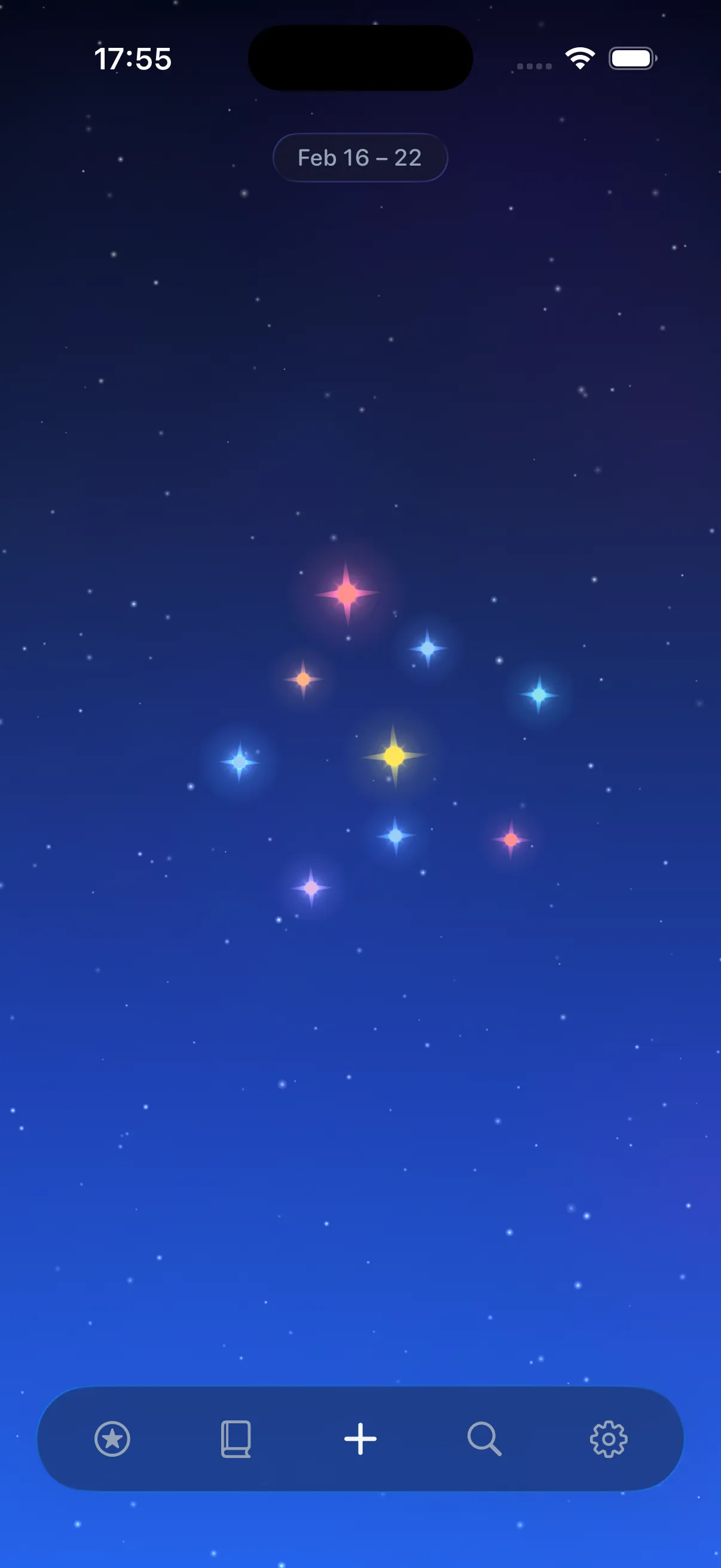
Turn your reflections into stars
Nightbook is a quiet journal for your evening thoughts. Every entry becomes a glowing star. Every week becomes a constellation.