How to Journal for Healing
Healing is not linear. It does not follow a schedule or respect your plans for it. Some days feel like progress. Others feel like starting over. Journaling during this process gives you a place to be wherever you actually are, without pretending to be further along. This guide offers a way to use writing as a quiet companion through the uneven, deeply personal work of getting better.
Why this helps
When you are healing, the world often expects you to narrate your recovery in tidy terms. Writing privately lets you tell the truth. You can admit that you are angry, that you are not coping as well as you appear to be, that some days the weight of it all feels unbearable. This honesty is not indulgent. It is necessary. Research on expressive writing and recovery has shown that processing difficult experiences through writing can support both emotional and physical healing, partly by helping the brain integrate fragmented experiences into a coherent narrative, something central to trauma recovery. You do not need to write a full account of what happened. You can write around it, about how the light looks different now, about the strange kindness of a stranger, about the gap where something used to be. The journal holds what you are not ready to share with anyone else, and it waits patiently until you are.
How to begin
Begin without expectations
Do not write to feel better. Write to feel what is actually there. Some entries will bring relief. Others may stir up pain you thought had settled. Both are part of the process. Let the journal be a place with no required outcome.
Write at your own pace
There is no correct frequency for healing journals. Some weeks you may write every night. Other weeks, not at all. Follow your own rhythm. Forcing yourself to write when you are not ready can feel like reopening a wound before it has had time to close.
Name what you have lost
Whether you are healing from grief, illness, a broken relationship, or something harder to define, write about what is missing. Naming the absence gives it shape. It is easier to carry something you can see than something that remains formless and everywhere.
Notice what is still here
Healing sometimes narrows your vision until all you can see is the wound. Writing about what remains, the people, the capacities, the small pleasures that still reach you, can gently widen the frame. Not as a dismissal of your pain, but as a reminder that you are more than it. A gratitude practice can gently widen the frame on the nights when you are ready.
Mark the quiet shifts
Healing often happens so slowly that you do not notice it until you look back. Write about the moments when something felt fractionally easier, when you laughed without guilt, or when a night passed without the familiar heaviness. These entries become evidence of movement, like stars slowly wheeling across the sky.
Things to keep in mind
- — If writing about your experience directly feels too raw, write around it. Describe the weather, the room, what your body feels like.
- — Do not reread old entries until you feel steady enough. The journal will keep them safe until you are ready.
- — Let Nightbook be a container for the nights when everything surfaces. The quiet, dark interface asks nothing of you except honesty.
- — Healing is not about getting back to who you were. It is about becoming who you are now. Let your writing reflect that.
- — If journaling consistently triggers distress rather than relief, pause and consider seeking support alongside the practice.
Prompts to try tonight
- ★ What does healing feel like in your body right now, not what you think it should feel like, but what it actually feels like?
- ★ What have you lost that you have not yet fully allowed yourself to grieve?
- ★ What surprised you today about your own resilience?
- ★ Who or what has been a source of quiet comfort during this time?
- ★ What would you like to say to the version of yourself who first began this process?
Keep exploring
Guides
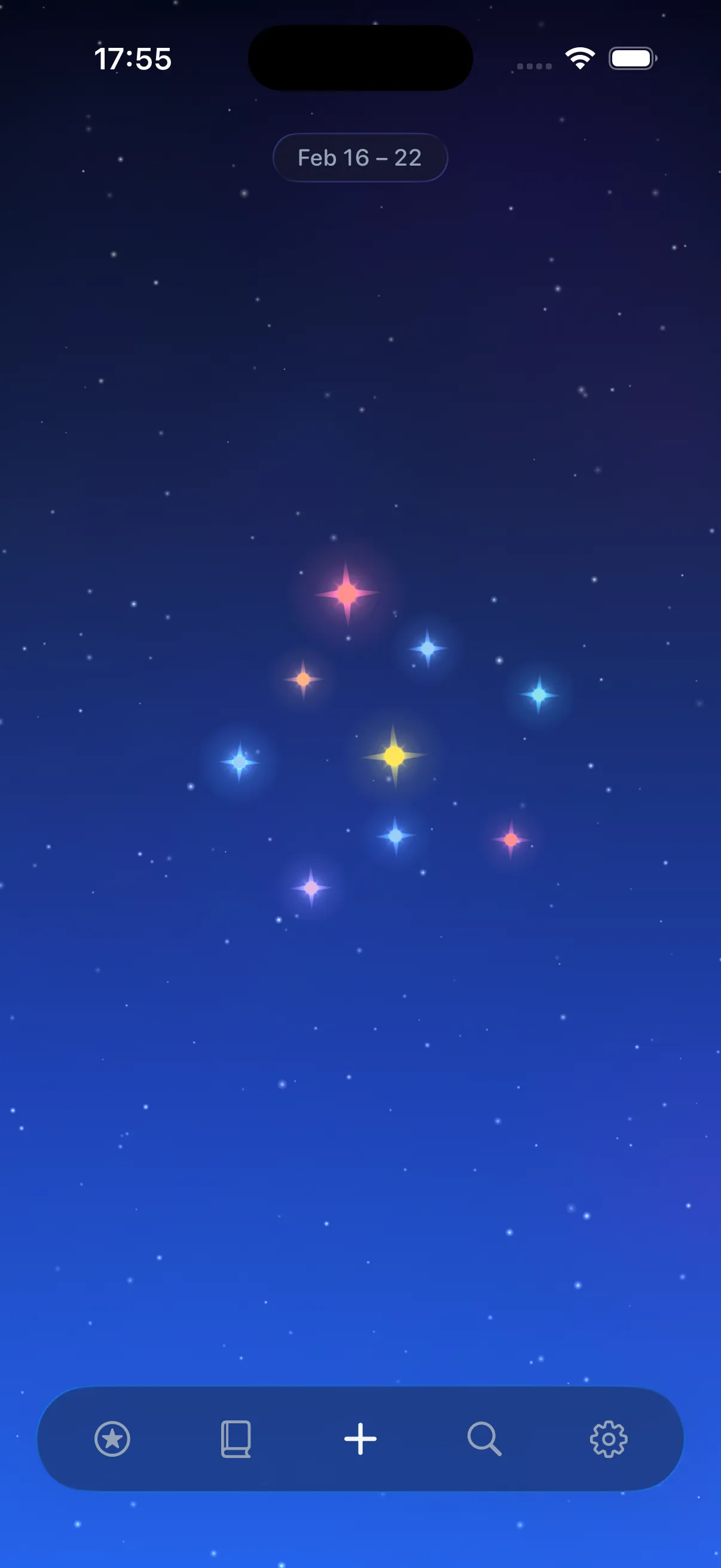
Turn your reflections into stars
Nightbook is a quiet journal for your evening thoughts. Every entry becomes a glowing star. Every week becomes a constellation.