How to Track Your Mood in a Journal
Moods can feel shapeless and unpredictable when they exist only in your head. Writing them down gives them edges. Tracking them over time gives them context. Mood tracking in a journal is not about labelling every feeling precisely. It is about building a record that helps you understand your emotional landscape a little more clearly, night by night.
Why this helps
When you track your mood regularly, patterns begin to emerge that are invisible in the moment. You might notice that your energy drops every Sunday evening, or that a particular relationship consistently leaves you feeling drained, or that your best days share a common thread you had not identified. This kind of self-knowledge is difficult to arrive at through thinking alone, because memory is unreliable and tends to flatten nuance. A written record preserves the texture of each day. Research on self-monitoring has shown that the simple act of noting how you feel can increase emotional awareness and even improve emotional regulation over time. You do not need complex scales or clinical language. A word, a colour, a star. Something small enough to do every night, specific enough to mean something when you look back.
How to begin
Choose a simple system
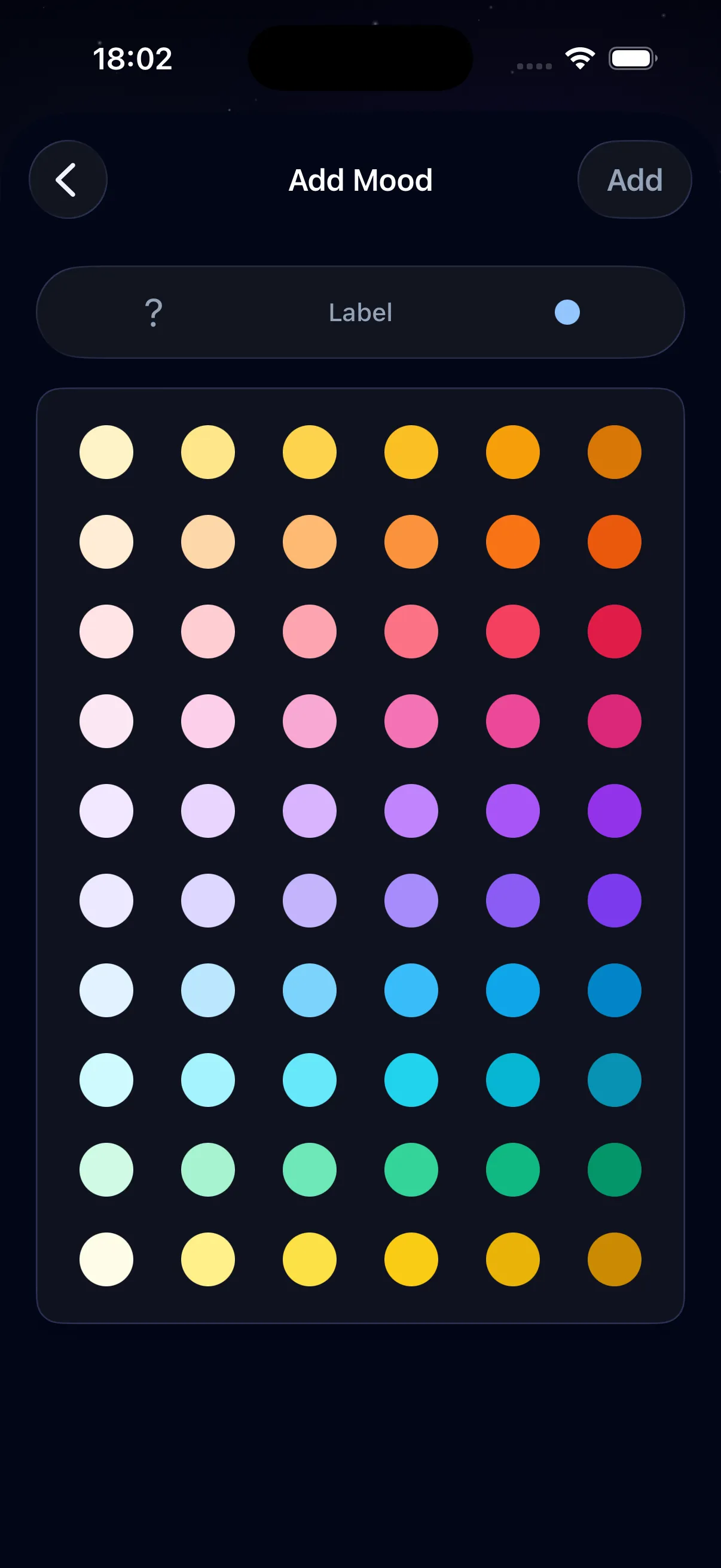
Pick a method that takes almost no effort. A single word, a number from one to five, or a colour that represents how you feel. The simpler the system, the more likely you are to use it every day. Complexity is the enemy of consistency here. Mood journaling as a method keeps this principle at its core.
Record your mood at the same time
Tracking works best when it captures the same slice of each day. The end of the evening is ideal because it gives you a natural point of reflection. Write your mood tag before or after your journal entry, whichever feels more natural.
Add a sentence of context
A mood tag alone tells you what you felt. A sentence or two tells you why. "Restless. Could not stop thinking about the email I sent this afternoon." That small addition transforms a data point into something you can learn from.
Review weekly or monthly
Set aside a few minutes at the end of each week to look back at your mood entries. Notice clusters. Notice outliers. You are not diagnosing anything. You are simply watching the shape of your inner weather, the way you might watch clouds passing.
Respond to what you find
When patterns appear, let them inform small changes. If Friday evenings are consistently low, consider what might help. If mornings after long walks are consistently better, notice that too. The journal becomes a quiet adviser, offering evidence rather than opinion.
Things to keep in mind
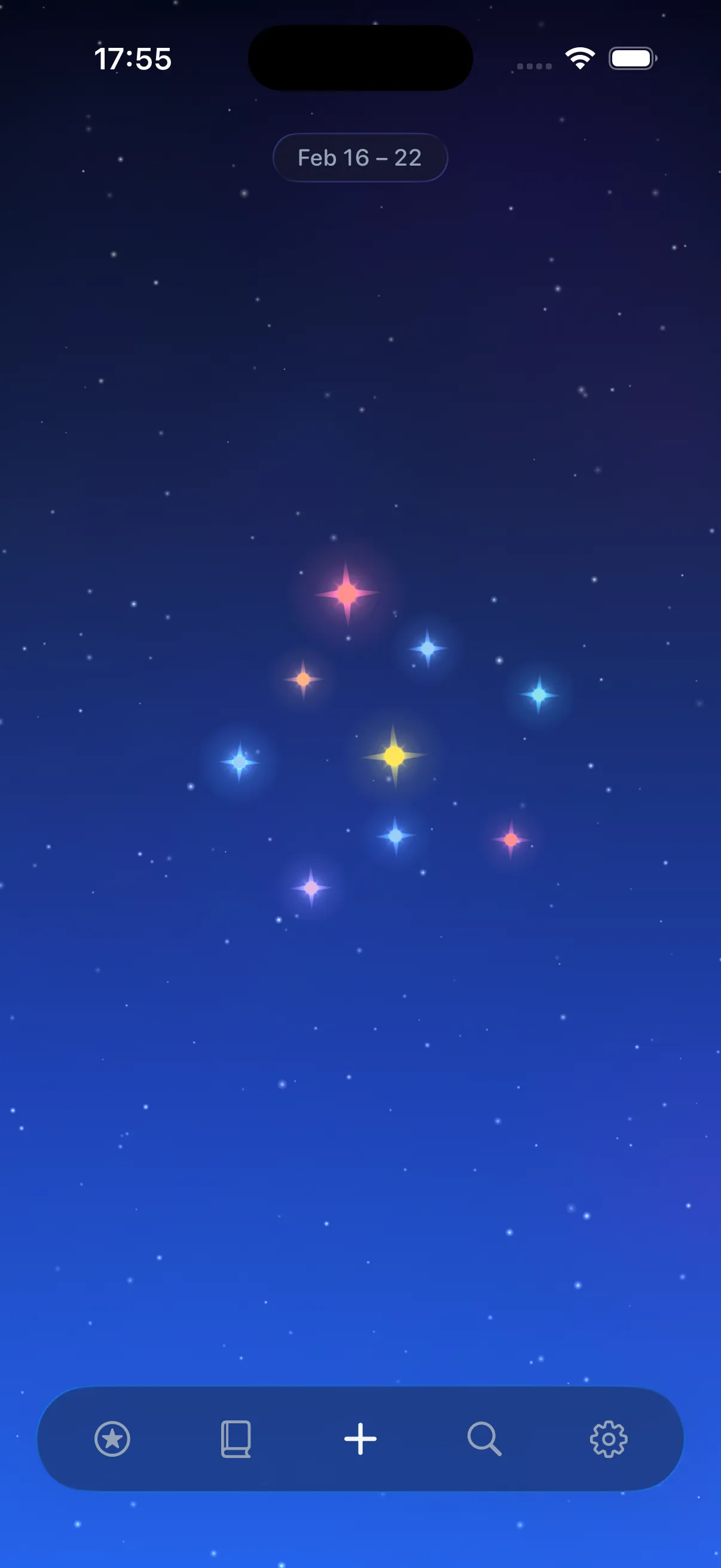
- — Nightbook's colour-coded mood stars make it easy to see emotional patterns at a glance across weeks.
- — Do not overthink the label. Your first instinct about how you feel is usually the most honest one.
- — Track even on days when nothing remarkable happened. Ordinary days have textures too.
- — Avoid judging your moods as good or bad. They are information, not verdicts.
- — If you notice a sustained low mood over several weeks, consider sharing that pattern with someone you trust.
Prompts to try tonight
- ★ How would you describe your mood right now using just one word?
- ★ What was the strongest emotion you felt today, and when did it arrive?
- ★ Looking at this past week, do you notice any patterns in how you have been feeling?
- ★ What surprised you about your mood today compared to what you expected?
- ★ If your mood this evening had a colour, what would it be and why?
Keep exploring
Guides
Turn your reflections into stars
Nightbook is a quiet journal for your evening thoughts. Every entry becomes a glowing star. Every week becomes a constellation.