Journaling App for Emotional Processing
People who want to use journaling as a tool for understanding and working through their emotions, whether alongside therapy, after difficult life events, or as an ongoing practice of emotional literacy.
Emotions do not arrive neatly labelled. They layer, contradict, and sometimes ambush you hours after the event that triggered them. Writing about what you are feeling (especially at night, when the noise of the day has faded) is one of the most effective ways to untangle those layers. The research behind expressive writing confirms what many people discover for themselves: that putting feelings into words changes your relationship with them. Nightbook gives you a private, unhurried space to sit with whatever has surfaced, a place to practise emotional regulation without pressure to resolve it tonight.
Why journaling can feel hard
Emotions that are hard to name
Knowing you feel "off" without being able to pinpoint why is frustrating. Without a practice of articulation, emotions remain vague and harder to manage.
No safe space to be messy
Processing emotions requires honesty that can feel uncomfortable. Conversations risk judgement, and social media demands composure.
Therapy homework without a home
Therapists often suggest journaling between sessions, but give no specific tool or structure. Entries end up scattered across notes apps and scraps of paper.
Emotional patterns that repeat unnoticed
Without a record, it is easy to fall into the same emotional cycles: the same triggers, the same reactions, without recognising the pattern.
How Nightbook helps
Mood tags with colour-coded stars
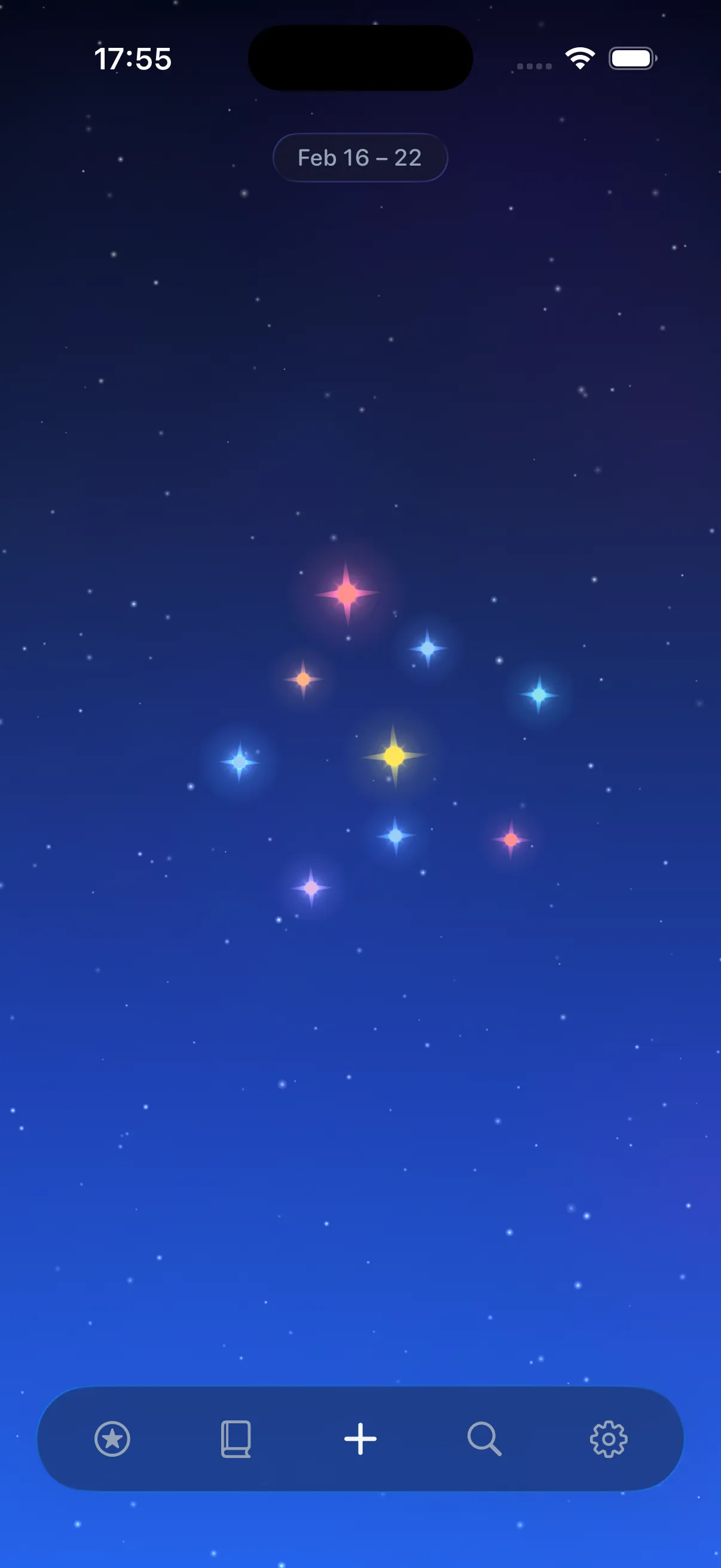
Naming your mood each night is a small but significant act of emotional labelling. Over weeks, the colours in your sky make patterns visible that you could not see from inside the feeling.
Custom moods
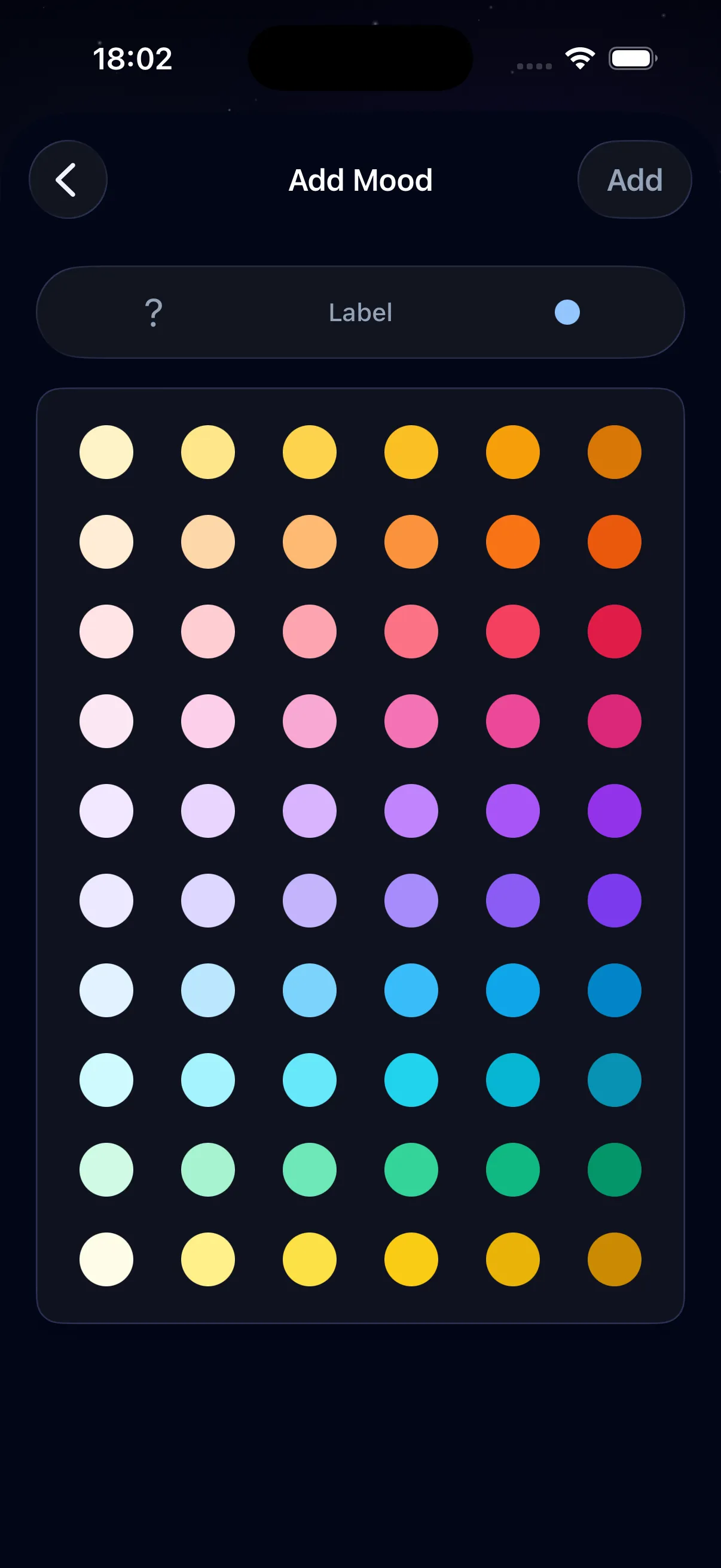
The default six moods are a starting point, but emotional processing often requires more nuance. Creating tags like "numb," "raw," or "lighter" lets you track what actually matters to you.
Search
When you notice a recurring feeling, search lets you find every time you have written about it. That history becomes a map of the pattern and, often, the way through it.
Face ID lock
Emotional processing requires radical honesty. Knowing that your entries are biometrically locked removes the filter that would otherwise soften what you write.
Your first night
Tonight, write about one emotion you felt today that you did not fully express in the moment. Describe where you felt it in your body, what triggered it, and how it shifted over time. Our guide to journaling for emotional processing can help if you are unsure where to begin. Do not try to resolve it, just describe it. Then choose the mood tag that fits best. This is the beginning of a practice that compounds quietly over weeks.
Keep exploring
For
Turn your reflections into stars
Nightbook is a quiet journal for your evening thoughts. Every entry becomes a glowing star. Every week becomes a constellation.