Art Journaling
Words are not the only way to tell the truth about how you feel. Sometimes a colour says it better. A rough line, a torn edge, a page filled with nothing but dark blue. Art journaling opens the door to expression that lives beyond language, where feeling can take form without needing to be named.
What it is
Art journaling combines visual expression with written reflection. It might involve drawing, painting, collage, colour blocking, or any form of mark-making alongside or in place of words. The method does not require artistic skill. It is not about creating something beautiful. It is about using visual and tactile processes to access and express feelings that language alone might not reach. Many emotions are felt in the body as textures, colours, or shapes before they become words. Art journaling lets you work with those raw impressions directly. The result is often a journal that feels deeply personal and surprisingly revealing, even when the pages contain very few words at all.
How it works
Gather simple materials
You do not need much. A pen, some coloured pencils, perhaps a glue stick and old magazines. If you are working digitally, a simple drawing tool will do. The point is to have options beyond text, so that you can choose the medium that fits the feeling.
Start with a feeling, not a plan
Rather than deciding what to draw, start with what you feel. If the day left you tired, what colour is that tiredness? What shape does it take? Let the feeling guide the first marks on the page, and follow where they lead.
Layer in words if they come
Words and images can coexist on the same page. A single sentence written across a painted background. A word circled and surrounded by colour. Let the text arrive naturally rather than forcing it. Some entries will be mostly visual. Others will be mostly written with a border of colour. Both are valid.
Resist the urge to judge the result
Art journaling is not about the product. The page does not need to look good or make visual sense. It needs to feel honest. If you find yourself worrying about aesthetics, that is a sign to work more loosely, more roughly, with less care for how it looks and more attention to how it feels.
Why it works
Accesses emotions that words cannot reach
Some feelings resist verbal expression. Grief, longing, a vague unease that has no obvious source. Art journaling gives these feelings a form without requiring you to name them precisely. The act of externalising them visually can be deeply relieving, even when you cannot quite say what they are.
Engages the body in the process
The physical act of drawing, colouring, or cutting and pasting engages the hands and the senses in a way that typing or writing does not. This bodily engagement can be grounding, pulling your attention into the present moment and out of the swirl of abstract thought.
Creates a visual record of emotional change
Looking back through an art journal reveals shifts in mood, energy, and emotional tone that might not be apparent in written entries alone. The colours darken and lighten. The marks become softer or more jagged. The visual record tells its own story of how you have been moving through time.
Putting it into practice
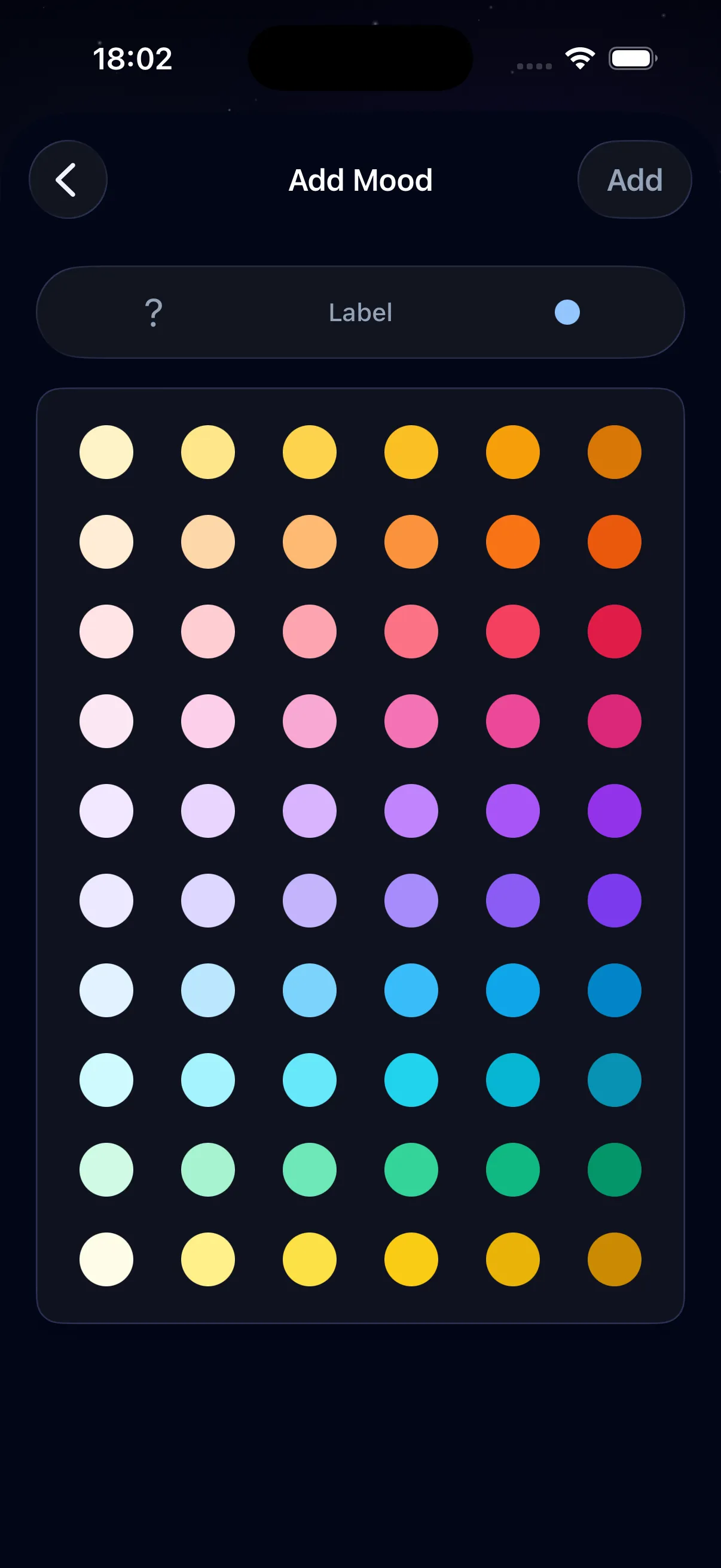
In the evening, when the day is done and quiet settles, art journaling offers a way to process that does not demand articulation. Open Nightbook, and even within a text-based entry, you can describe what you would draw, name the colours of your mood, or sketch a feeling in words that read more like captions than paragraphs. The practice is about allowing expression to take whatever form it needs. Some nights that form is a careful sentence. Other nights it is simply a word, held in the colour of how the day felt.
Prompts to try tonight
- ★ If today had a colour, what would it be, and what shade specifically?
- ★ What shape does the feeling I am carrying right now take in my mind?
- ★ If I could draw one image to represent this week, what would it look like?
- ★ What is something I felt today that I cannot quite put into words?
- ★ If I were to fill a page with nothing but texture, what texture would match my mood?
Keep exploring
Methods
Guides
Benefits
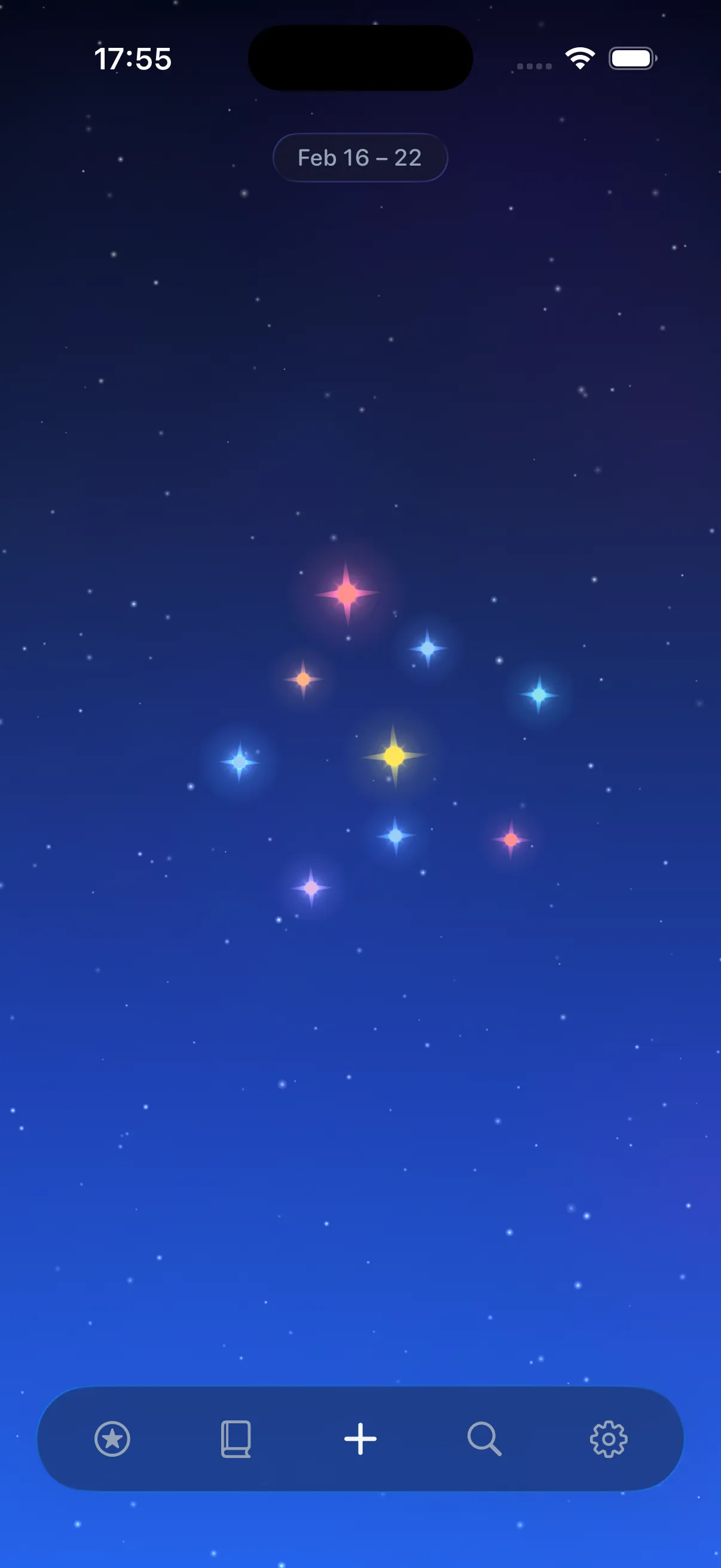
Turn your reflections into stars
Nightbook is a quiet journal for your evening thoughts. Every entry becomes a glowing star. Every week becomes a constellation.