Mood Journaling
We feel things all day long, but rarely stop to look at those feelings closely. Mood journaling is the practice of doing exactly that. Not changing how you feel, not judging it, but observing it with enough care to understand the shape of your emotional life and the patterns it follows.
What it is
Mood journaling is the practice of regularly recording your emotional state, often alongside brief notes about context, triggers, and physical sensations. At its simplest, it might be a daily mood rating on a scale. At its richest, it becomes a nuanced exploration of how emotions arise, shift, and dissolve throughout the day. The method draws on principles from cognitive behavioural therapy, where tracking emotions is a foundational skill for understanding the connection between thoughts, feelings, and behaviour. Over time, a mood journal reveals patterns that are invisible in the moment. You may discover that your mood follows weekly rhythms, that certain people or situations reliably affect how you feel, or that emotions you thought were constant are actually far more variable than they seemed.
How it works
Name the emotion specifically
Move beyond broad labels like "good" or "bad." Are you content, restless, melancholy, energised, hollow, tender? The more precise the word, the more useful the entry becomes. Building an emotional vocabulary is itself part of the practice.
Note the context
Briefly record what was happening when you noticed the feeling. Where were you? Who were you with? What had just occurred? This context is what transforms a mood log from a list of feelings into a tool for understanding them.
Rate the intensity
Give the emotion a rough intensity rating, whether that is a number, a word, or simply noting whether it was faint, moderate, or strong. Intensity matters because a mild irritation and a deep anger are very different experiences, even though they share a family resemblance.
Reflect briefly on the pattern
After a week or more of entries, look back and notice what emerges. Are there moods that cluster at certain times of day? Emotions that reliably follow specific events? Feelings that surprised you with their frequency or absence? The pattern is where the insight lives.
Why it works
Builds emotional literacy
Many people struggle to name what they feel with any precision. Mood journaling develops this skill naturally, expanding your emotional vocabulary through regular practice. The ability to name a feeling accurately is the first step toward understanding it and, when necessary, responding to it thoughtfully.
Reveals invisible patterns
Day to day, moods seem to come and go without logic. But a mood journal, reviewed over weeks, often tells a different story. You might discover that you are consistently calmer on days you walk outside, or that Sunday evenings carry a particular kind of heaviness. These patterns, once seen, become actionable.
Creates distance between feeling and reacting
The act of pausing to observe and record an emotion introduces a small but significant gap between feeling something and acting on it. In that gap, there is room for choice. Mood journaling does not suppress emotion. It creates space around it.
Putting it into practice
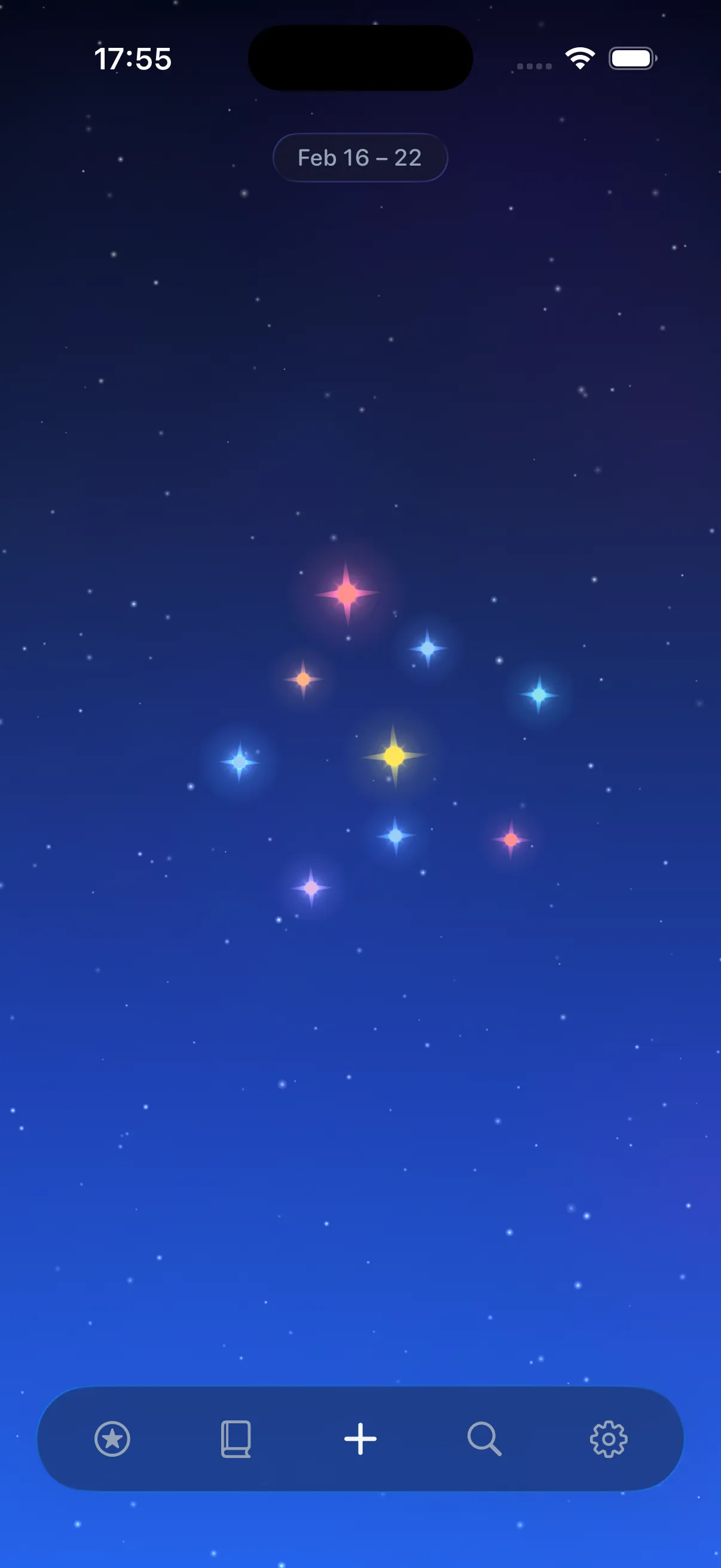
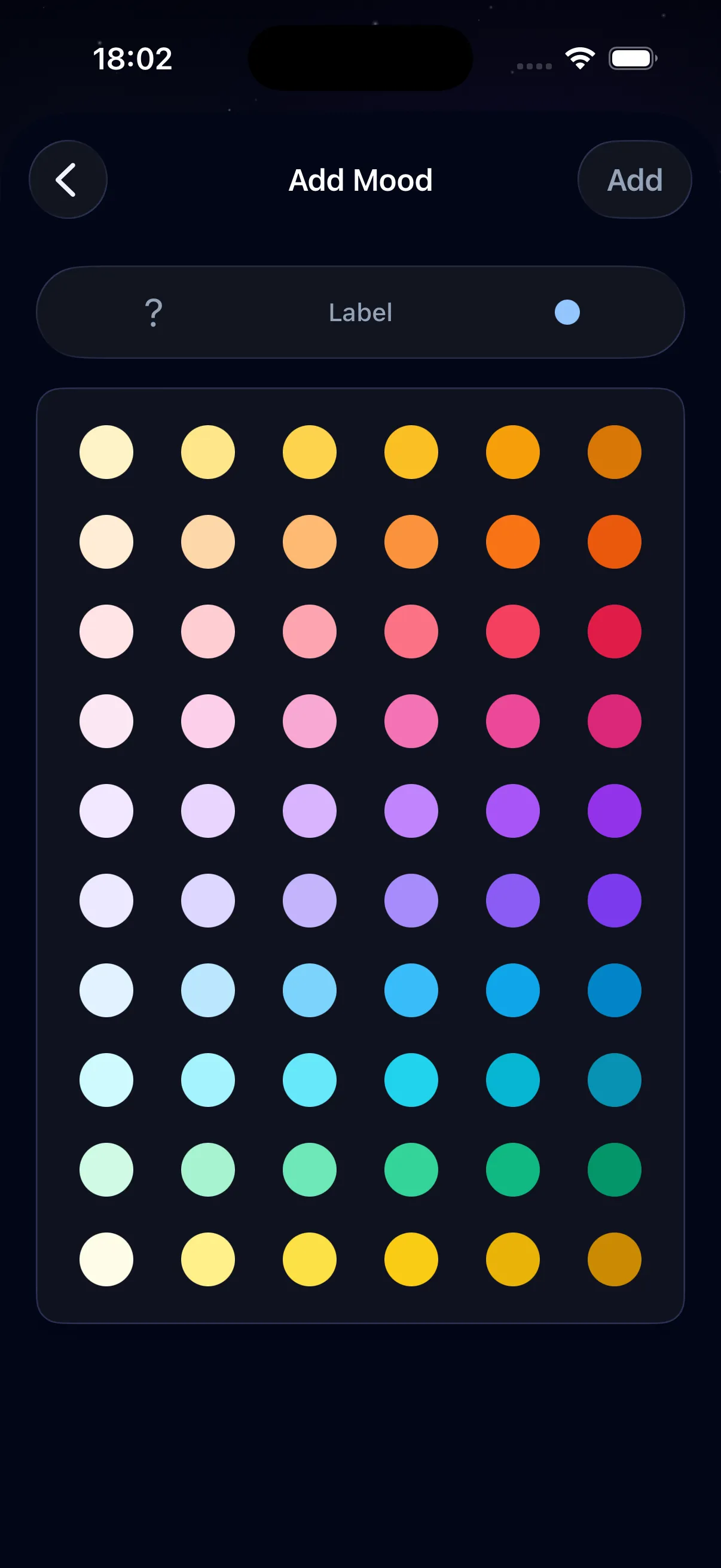
Evening is a natural time to sit with how the day felt. In Nightbook, you can tag your mood with each entry, building a visual record over time. But go beyond the tag. Write a sentence or two about the texture of the feeling, what brought it on, and how it sits in your body right now. Over weeks, your entries map the emotional weather of your life. The sky you build in Nightbook reflects this. Some stars will carry the colours of difficult days. Others will glow with contentment or quiet joy. Together, they form an honest portrait of a life that feels.
Prompts to try tonight
- ★ What is the most accurate word for how I feel right now, not "fine" but the real word?
- ★ When did my mood shift today, and what was happening at that moment?
- ★ Is there an emotion I have been feeling all week that I have not acknowledged?
- ★ How does my body feel right now, and what emotion does that physical state suggest?
- ★ Looking back at this week, what was my emotional baseline, and was it different from what I expected?
Keep exploring
Guides
Benefits
Turn your reflections into stars
Nightbook is a quiet journal for your evening thoughts. Every entry becomes a glowing star. Every week becomes a constellation.