Nature Journaling
The natural world carries on whether or not you notice it. The moon waxes and wanes, the trees shift through their seasons, the birds change their songs. Nature journaling is the practice of paying attention to all of this, of recording what you see and how it makes you feel, and of finding in that attention a particular kind of quiet.
What it is
Nature journaling is the practice of writing about the natural world as you observe it. It can include descriptions of weather, wildlife, plants, landscapes, night skies, seasonal changes, and the sensory details of being outdoors. The method has a long history, practised by naturalists, artists, and ordinary people who find that attending to the natural world grounds them in the present moment. Unlike scientific field notes, a personal nature journal includes your emotional and reflective responses to what you observe. How the first frost made you feel. What the evening light reminded you of. The way a particular birdsong seemed to hold the whole mood of the day. This blend of observation and reflection is what gives nature journaling its distinctive quality, part documentary, part meditation.
How it works
Observe with intention
Step outside, look up, or simply notice what is happening beyond your window. What is the weather? What is the light doing? What sounds reach you from the natural world? Observation is the foundation of this practice, and it begins with slowing down enough to actually see.
Record what you notice
Write down the details. Be specific. Not "it was cloudy" but "low, grey clouds moving fast from the west, the kind that make the afternoon feel like early evening." The precision of your description is what gives the entry its texture and its power to transport you back to the moment.
Include your response
After the observation, turn inward. How does what you see make you feel? What does it remind you of? Does the season mirror anything in your inner life? This reflective layer is what separates nature journaling from mere documentation and makes it a genuine practice of self-awareness.
Track changes over time
Nature moves in cycles, and a journal that spans months or years reveals those cycles in a deeply personal way. Note the date, the phase of the moon, the length of the daylight. Over time, your journal becomes a record not just of nature but of yourself within it, changing alongside the seasons.
Why it works
Grounds you in the present moment
Observing nature requires presence. You cannot describe what the sky looks like right now without actually looking at it. This simple act of attention pulls you out of your thoughts and into the physical world, providing a gentle antidote to the abstraction and screen-saturation of daily life.
Connects you to rhythms larger than your own
Daily life can feel relentlessly personal. Nature journaling places your experience within a larger context. The seasons turn regardless of your deadlines. The stars appear whether or not your day went well. There is comfort in this, a reminder that you are part of something vast and ongoing and fundamentally unconcerned with your to-do list.
Sharpens observational awareness
The practice of describing what you see trains your eye and your attention. Over time, you begin to notice things you previously walked past. The specific shade of the evening sky. The sound the wind makes in different types of trees. This heightened awareness spills over into the rest of your life, making you a more attentive and present observer of everything, not just nature.
Putting it into practice
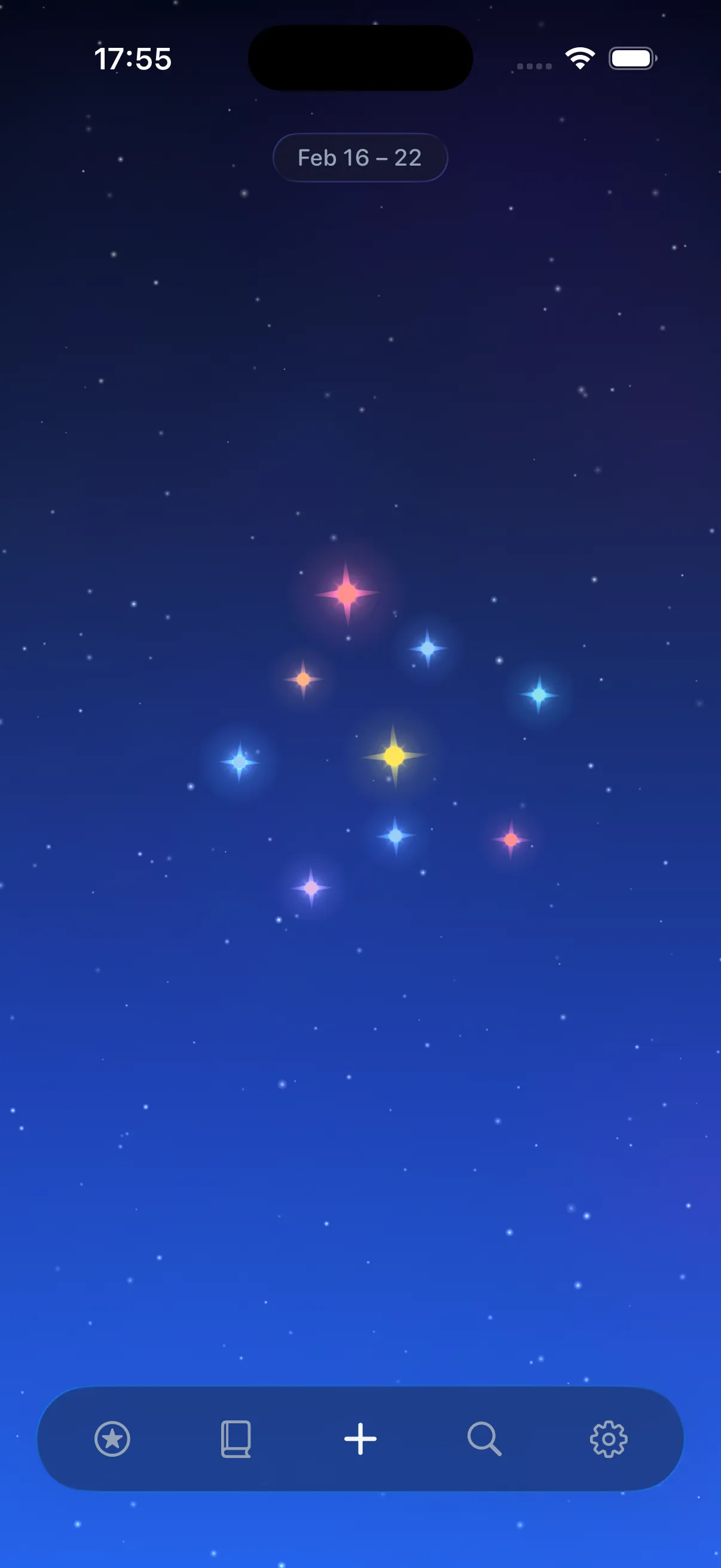
Evening is a rich time for nature observation. The light changes, the air cools, and the sky opens up. Before writing your entry in Nightbook, step outside for a moment, or look through a window, and notice what the natural world is doing. Then bring that observation into your entry. What did the sky look like tonight? What season does the air carry? In an app where every entry becomes a star, there is something fitting about a practice that asks you to look up at the real sky before you add to the one you are building.
Prompts to try tonight
- ★ What did I notice about the natural world today that I would normally have missed?
- ★ What is the season doing right now, and does it mirror anything in my own life?
- ★ What was the sky like this evening, and how did it make me feel?
- ★ What natural sound have I heard today, and when did I last truly listen to it?
- ★ If I described tonight's weather as a metaphor for my mood, what would I write?
Keep exploring
Turn your reflections into stars
Nightbook is a quiet journal for your evening thoughts. Every entry becomes a glowing star. Every week becomes a constellation.