Shadow Journaling
Everyone carries parts of themselves they would rather not look at. The jealousy, the pettiness, the fears that feel too embarrassing to name. Shadow journaling is the practice of turning toward those parts instead of away, writing about them with honesty and without condemnation. It is uncomfortable work, but it is also some of the most freeing writing you can do.
What it is
Shadow journaling is a reflective writing practice inspired by Carl Jung's concept of the shadow, the aspects of the self that are repressed, denied, or hidden from conscious awareness. These shadow elements might include emotions you consider unacceptable, traits you dislike in yourself, desires you suppress, or patterns of behaviour you would rather not examine. The practice does not ask you to celebrate these parts or to act on them. It asks you to acknowledge them. Jung believed that what remains unconscious controls us from behind, manifesting as projections, overreactions, and unexplained tensions. By writing about the shadow, you bring these hidden elements into the light of awareness, where they lose some of their power and become available for integration rather than suppression. The writing is private, honest, and often quite uncomfortable. It is also, for many people, profoundly liberating.
How it works
Notice what triggers a strong reaction
Shadow material often reveals itself through disproportionate emotional responses. If something makes you unreasonably angry, deeply envious, or harshly critical, there may be a shadow element at work. Start with these moments. They are doorways.
Write about what you find without judgement
Describe the reaction honestly. What were you feeling? What thought was underneath the feeling? What does the intensity of the response tell you about something unresolved in yourself? Write with curiosity rather than condemnation. You are investigating, not prosecuting.
Look for the denied part of yourself
Ask what the reaction might reveal about a quality you possess but do not want to acknowledge. If you judge someone for being selfish, is there a part of you that wants to be more selfish? If you resent someone's success, what does that say about your own unmet ambitions? These questions are uncomfortable, but they are where the growth lives.
Offer compassion to what you find
The purpose of shadow work is not self-punishment. When you discover a part of yourself you have been hiding from, meet it with understanding. It developed for a reason. It has been trying to protect you or express something you have not allowed. Let the journal be a place where it can exist without shame.
Why it works
Reduces the power of hidden patterns
Patterns you cannot see tend to run your life. Shadow journaling brings them into view, which diminishes their unconscious influence. You may not change overnight, but you become less likely to be blindsided by your own reactions, and that awareness alone changes how you move through the world.
Increases self-acceptance
Paradoxically, looking at the parts of yourself you like least often leads to greater self-acceptance. When you stop pretending those parts do not exist, you stop spending energy on the pretence. What remains is a more honest, more whole version of yourself, one that includes the shadow rather than exhausting itself trying to hide it.
Improves relationships
Much of what irritates us in others is a reflection of what we have not accepted in ourselves. Shadow journaling helps you recognise these projections, which means you become less likely to unfairly burden others with your unexamined material. Your relationships become cleaner, less reactive, and more genuinely compassionate.
Putting it into practice
Night is the natural territory of shadow work. The darkness outside matches the territory you are exploring within. In Nightbook, a shadow journaling entry might be the most honest thing you write all week. It does not need to be long. A few sentences about a reaction you had, what you think it reveals, and what you are willing to sit with tonight. Over time, these entries become some of the most valuable in your journal, not because they are comfortable, but because they are true.
Prompts to try tonight
- ★ What quality in someone else irritated me today, and is there any chance I share that quality?
- ★ What emotion did I suppress today, and what would have happened if I had expressed it?
- ★ What part of myself am I most reluctant to show others, and why?
- ★ When did I last overreact to something, and what might the intensity of that reaction be telling me?
- ★ What would I discover about myself if I stopped pretending to be only the person others see?
Keep exploring
Methods
Terms
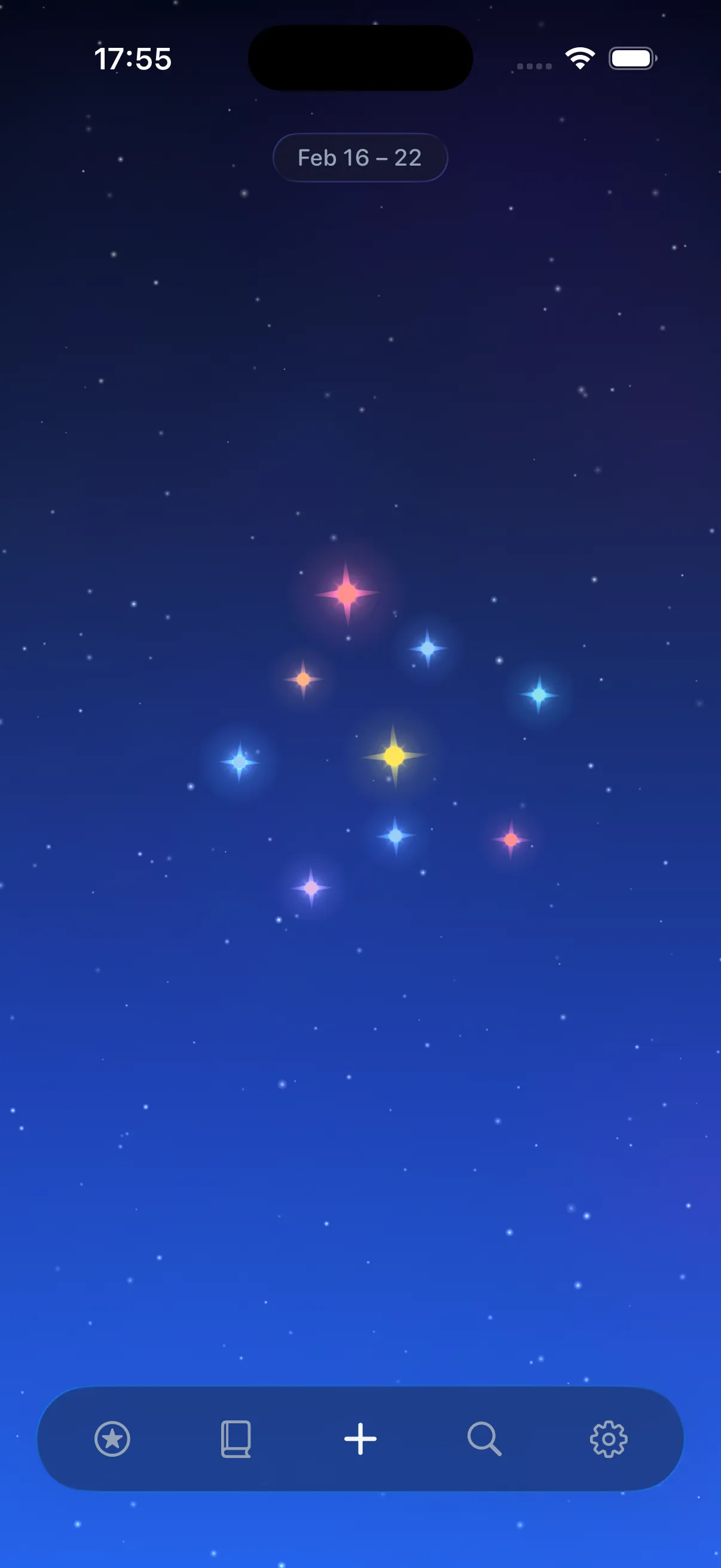
Turn your reflections into stars
Nightbook is a quiet journal for your evening thoughts. Every entry becomes a glowing star. Every week becomes a constellation.