Stream of Consciousness Journaling
There is a particular kind of relief that comes from writing without a destination. No structure, no prompts, no obligation to make sense. Stream of consciousness journaling invites you to follow the thread of your own thinking and see where it goes, trusting that the act of writing itself will surface what needs to surface.
What it is
Stream of consciousness journaling is unfiltered writing. You begin with whatever is in your mind and continue without pausing to edit, correct, or judge. The pen keeps moving, or the keys keep tapping, and you follow the natural current of your thoughts. It draws on the same principles as automatic writing and freewriting, methods long valued by writers and therapists alike. The goal is not to produce something coherent or polished. It is to bypass the inner editor and access thoughts and feelings that might not emerge through more structured approaches. What lands on the page is often surprising, sometimes messy, and frequently more honest than anything you would write if you were trying to write well.
How it works
Set a time limit
Choose a duration that feels manageable. Ten to twenty minutes is a good range. Having a boundary makes it easier to commit to the open-endedness of the method. You are not writing indefinitely. You are writing until the timer sounds.
Start with whatever is present
Do not search for a topic. Begin with the first thought in your head, even if it is mundane or fragmented. Write it down and let the next thought follow. If nothing comes, write that. "I have nothing to say" is a perfectly valid starting point, and it rarely lasts more than a sentence.
Do not stop or edit
Keep writing continuously. Do not go back to fix spelling, rephrase a sentence, or cross anything out. The moment you pause to evaluate, you re-engage the analytical mind, which is precisely what this method is designed to quiet.
Read back only if you choose to
When the time is up, you can close the entry without rereading it. Some people find value in looking back after a few days, noticing themes or feelings they did not recognise in the moment. Others prefer to let the writing serve its purpose and move on. Both approaches are valid.
Why it works
Bypasses the inner critic
The inner editor is responsible for much of the anxiety people feel about journaling. By writing without stopping, you give that voice no room to operate. What emerges is rawer and closer to the truth of what you are actually thinking and feeling, rather than the polished version you think you should present.
Surfaces buried thoughts and emotions
Thoughts that sit just below the surface of conscious awareness often emerge during stream of consciousness writing. You may start writing about dinner plans and find yourself, three sentences later, writing about something you have been avoiding for weeks. The method creates the conditions for this to happen naturally.
Reduces the pressure of perfection
There is no right way to do this. There is no wrong way either. That freedom is genuinely liberating for people who have tried journaling before and felt they were not doing it properly. Stream of consciousness writing cannot be done badly, which makes it one of the most accessible methods there is.
Putting it into practice
This method pairs well with the transition from day to night. Sit somewhere quiet in the evening, open Nightbook, and begin typing whatever is in your mind. Do not plan what to say. Let the day's residue spill out in whatever order it arrives. Some nights the writing will be mundane. Other nights it will surprise you with its honesty. Over weeks, the entries become a remarkably truthful record of where your mind has been, one that no amount of careful, curated journaling could replicate.
Prompts to try tonight
- ★ If I start writing right now without thinking, what is the first sentence that comes?
- ★ What thought have I been circling around today without quite landing on?
- ★ What am I avoiding saying, even to myself?
- ★ If my mind were a room right now, what would it look like?
- ★ What would I write if I knew no one, including me, would ever read it?
Keep exploring
Turn your reflections into stars
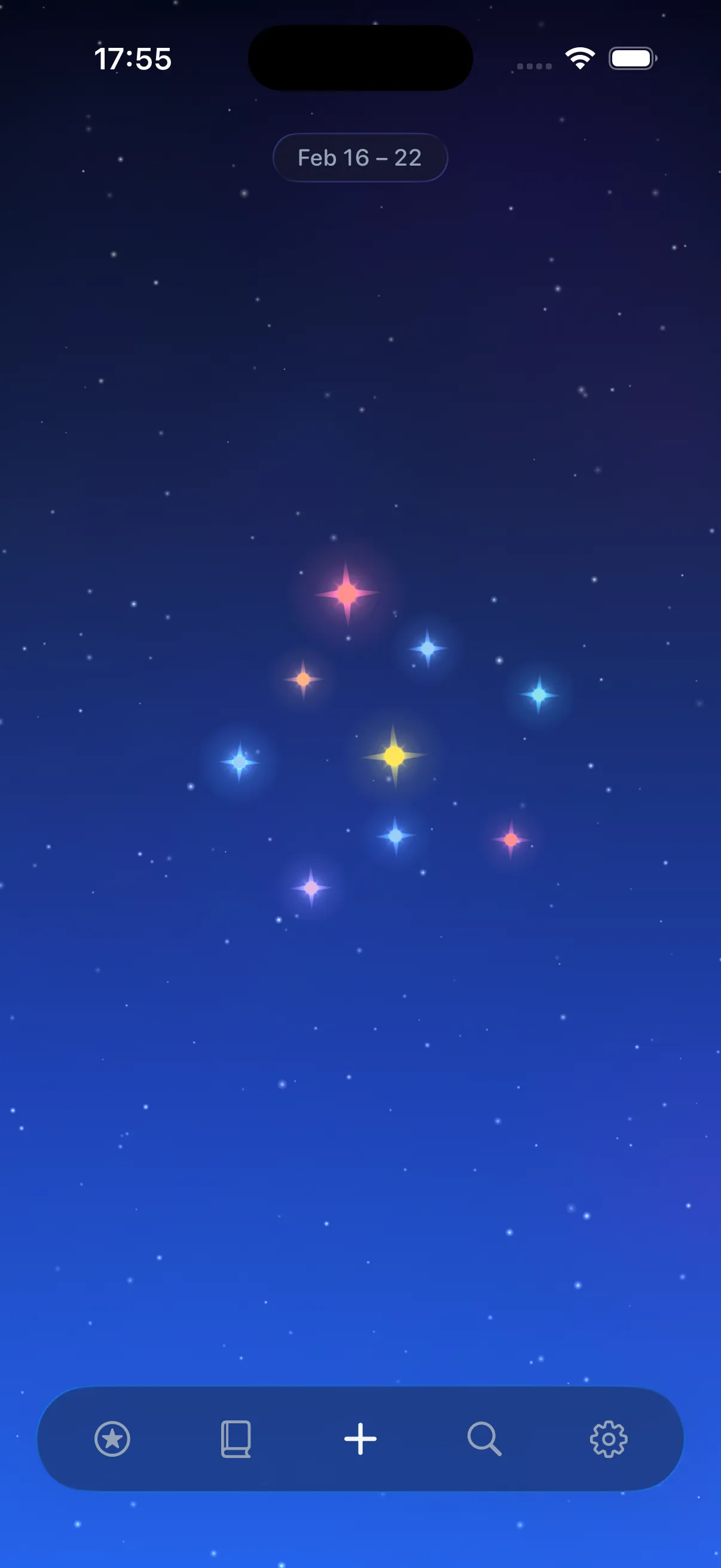
Nightbook is a quiet journal for your evening thoughts. Every entry becomes a glowing star. Every week becomes a constellation.