Unsent Letters
Some things need to be said even when there is no one to say them to. An unsent letter gives those words a place to exist. It is addressed to someone, but written entirely for you. The honesty this makes possible is often startling, precisely because there are no consequences for telling the truth.
What it is
Unsent letters are journal entries written in the form of letters to a specific person, to a past or future version of yourself, or even to abstract concepts like fear, grief, or a chapter of your life that has ended. The letter format creates a sense of directness and intimacy that ordinary journaling sometimes lacks. When you write to someone, even someone who will never read the words, you naturally become more honest, more specific, and more emotionally present. The method has roots in psychotherapy, where unsent letters have long been used to process unresolved feelings, grieve losses, express anger safely, and find closure without requiring the other person's participation. The power of the practice lies in its privacy. You can say everything you need to say, knowing the letter will never leave the page.
How it works
Choose your recipient
Write to whoever comes to mind. A parent, a friend you have lost touch with, someone who hurt you, someone you hurt. You can also write to yourself at a different age, to a part of yourself you struggle with, or to something intangible like a fear or a regret. The recipient shapes the letter's tone and direction.
Begin with "Dear" and write naturally
The formality of a letter opening creates a container for what follows. Begin with "Dear" and the name, then write as if you were actually speaking to that person. Let the words come without editing. Say what you have not been able to say, or what you did not know you needed to say until you started writing.
Include what you feel, not just what happened
Facts matter less here than feelings. Tell the person how their actions affected you, what you wish had been different, what you are grateful for, what you never got to say. The emotional content is where the healing lives.
Close the letter in whatever way feels right
Some letters end with forgiveness. Others end with anger that has finally been expressed. Some simply trail off. There is no correct ending. Close the letter when you have said what needed saying, and let it rest.
Why it works
Processes unresolved emotions safely
Many difficult emotions persist because they have no outlet. An unsent letter provides one. You can express rage, grief, love, disappointment, or longing without risking a relationship or reopening a wound. The page absorbs what it would be unwise or impossible to say aloud.
Creates a sense of closure
Closure does not require the other person's participation. Often, writing what you would have said is enough to release the feeling that something was left unfinished. The letter becomes the conversation you never had, and having it with yourself can be surprisingly sufficient.
Clarifies what you actually feel
Writing to someone forces you to organise your emotions in a way that thinking about them does not. You may sit down intending to write an angry letter and find tenderness underneath. Or begin with affection and discover resentment you did not know you were carrying. The letter reveals what is really there.
Putting it into practice
The quiet of evening lends itself to this kind of honest, private writing. In Nightbook, an unsent letter looks like any other entry from the outside, but the experience of writing one feels different. It is more direct, more personal, more charged. You might write to someone you saw today, to someone you have not spoken to in years, or to a version of yourself that needs to hear something kind. The letter does not need to be long. It just needs to be true.
Prompts to try tonight
- ★ Who have I been wanting to say something to, and what would I say if there were no consequences?
- ★ What would I write to the person I was a year ago, knowing what I know now?
- ★ Is there someone I need to forgive, and can I begin that process in a letter I never send?
- ★ What would I say to someone I have lost, if they could read one more letter from me?
- ★ If I wrote a letter to my fear, what would I want it to know?
Keep exploring
Methods
Turn your reflections into stars
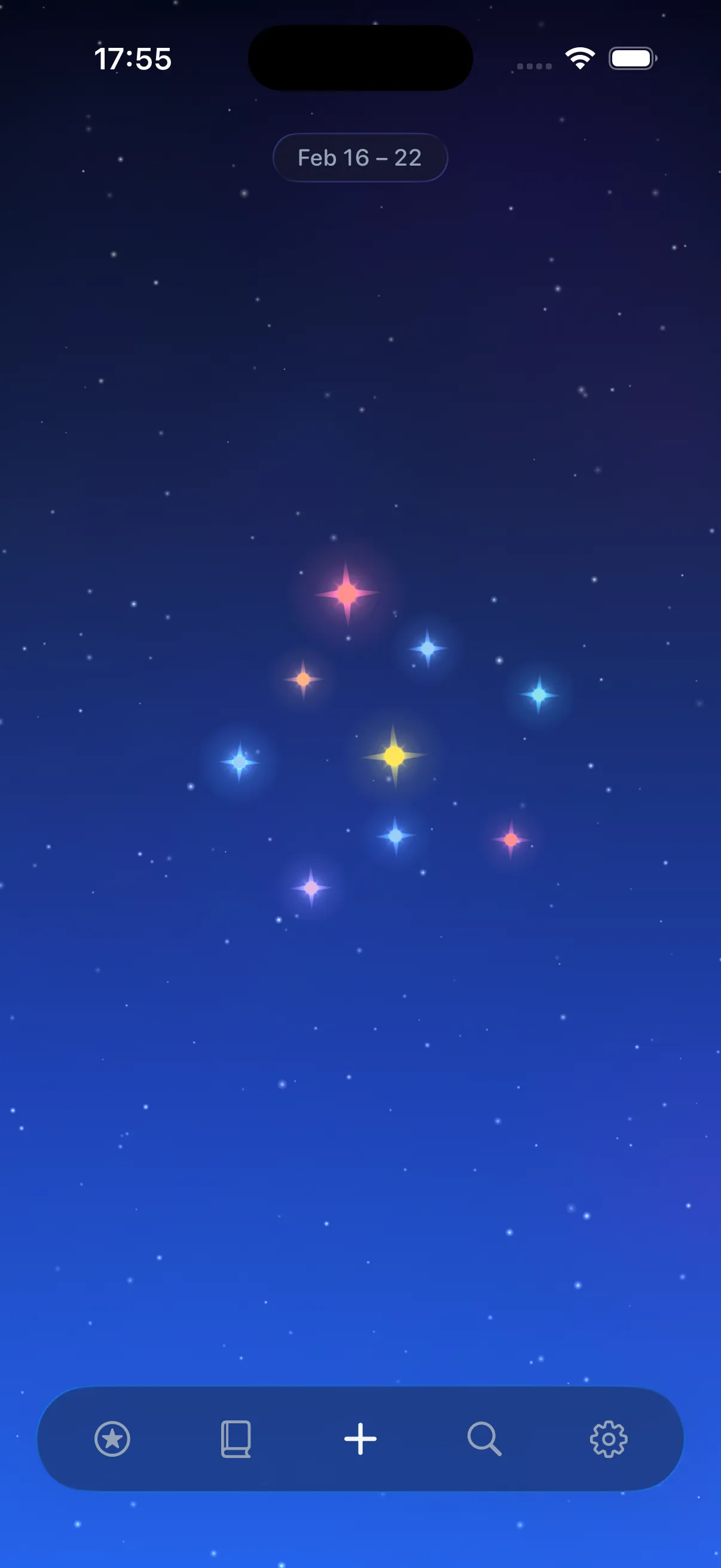
Nightbook is a quiet journal for your evening thoughts. Every entry becomes a glowing star. Every week becomes a constellation.